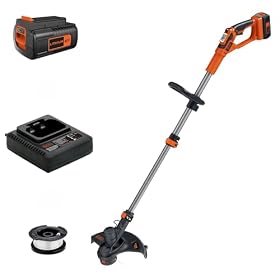
A useful string trimmer review explains what was cut, under what conditions, and how the tool performed—not just its power source or advertised features.
How to read a string trimmer review
A useful string trimmer review should show whether the tool suits your yard and explain how it performed on comparable work. Look beyond star ratings and headline claims: check the test conditions, cutting performance, comfort, runtime, line and head compatibility, and maintenance needs.
Check whether the test matches your yard
Before comparing models, consider what you actually need to trim: light grass along paths, dense weeds, overgrown areas, or a large property. A review based on light edging may tell you little about how a trimmer handles thick growth.
Look for details such as:
The type and height of vegetation
Whether the reviewer trimmed continuously or in short sessions
The size and condition of the area
Whether the tool was used for edging, clearing, or both
The battery, line, and cutting-head configuration
Treat results as a poor match if the review does not describe the work or setup. A tool that performs well in a small, tidy yard may not be the right choice for heavy or extended cutting.
Product prices and availability are accurate as of the date/time indicated and are subject to change. Any price and availability information displayed on Amazon.com at the time of purchase will apply to the purchase of this product.
Compare performance claims carefully
Power source and workload
Reviews should describe performance, not just label a trimmer as battery-powered or gas-powered. For cordless models, note the battery used and whether the review discusses runtime under actual cutting conditions. For gas models, look for information about starting, handling, and upkeep as well as cutting ability.
A runtime figure without details about vegetation, cutting technique, or battery configuration is hard to compare. Likewise, general claims about power do not establish how well a trimmer handles your specific workload.
Cutting swath and line
Cutting swath is the width covered in one pass. A wider swath may help cover open areas faster, but it does not by itself show how effectively the trimmer cuts dense growth.
Check whether a review identifies the line type or diameter used and whether the trimmer accepts alternatives. Line compatibility matters because you may want a different line for your vegetation, and not every head supports every size or shape. Follow the tool maker’s instructions; using an incompatible line can cause poor feeding or damage.
Gas models for longer or heavier trimming sessions
Product prices and availability are accurate as of the date/time indicated and are subject to change. Any price and availability information displayed on Amazon.com at the time of purchase will apply to the purchase of this product.
Look for comfort and control details
Comfort affects how long a trimmer is practical to use. Strong reviews describe balance, handle adjustment, vibration, noise, and how easy the tool is to maneuver around obstacles. They may also explain whether the weight includes the battery or cutting head, since those details affect comparisons.
A review that simply calls a trimmer “light” or “comfortable” is less useful than one that explains who may find it manageable and what makes it tiring. If possible, handle a similar tool in person before buying, especially if weight, grip, or vibration is a concern.
Check the head, feeding system, and upkeep
String trimmer heads can differ in how line is loaded and advanced. A review should explain whether the head is easy to reload, whether line feeds consistently, and whether the reviewer encountered tangles or jams. These observations are more useful than a feature name alone.
Also check for practical maintenance notes: battery care for cordless tools, routine engine maintenance for gas models, and whether common replacement parts are readily identifiable. Confirm compatibility with the manufacturer’s documentation before buying replacement line, a head, or other parts.
Judge the review’s evidence and limitations
Give more weight to reviews that explain their method, disclose the exact configuration, and separate observed results from manufacturer claims. Be cautious when a review:
Gives a firm runtime or cutting-area figure without describing the conditions
Compares tools tested with different line, batteries, or workloads
Treats advertised features as proof of performance
Offers a rating without explaining its priorities
Makes broad durability claims based on brief use
A review can still be helpful without testing every condition. It should be clear about what it did not assess and avoid presenting a short evaluation as proof of long-term reliability.
Make a decision from the details
Use reviews to narrow the choices, then check the owner’s manual and product specifications for fit and compatibility. Focus on the factors that matter most for your yard: workload, battery-platform fit or engine upkeep, line requirements, comfort, and replacement-part availability.
If two reviews disagree, compare their setups before deciding that one is wrong. Different vegetation, line, technique, and operator expectations can produce different results. When a key detail is missing, look for another review that covers it rather than relying on a single score.
FAQ
What matters most in a string trimmer review?
Look for performance on work similar to yours, clearly stated test conditions, comfort details, runtime or upkeep information, and line and head compatibility.
Can I compare runtime figures from different trimmer reviews?
Only cautiously. Runtime depends on the battery configuration, vegetation, cutting technique, and other conditions. Compare figures only when the test setups are described and reasonably similar.
Should I trust a string trimmer review’s star rating?
Use the rating as a quick summary, not the main evidence. Read the review to see what was tested, what the reviewer prioritized, and whether those factors match your needs.