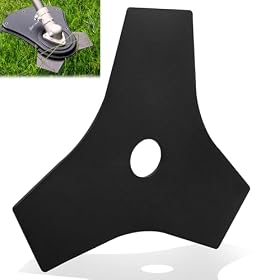
String is suited to light, flexible blackberry growth; a compatible metal brush-cutter blade is more capable on thicker, woody canes. For tangled or mature brambles, cut selectively with hand tools instead of forcing a trimmer through them.
For blackberry canes, string works best on young, flexible growth, while a metal blade on a trimmer specifically designed for blades can handle thicker, woody stems more effectively. Neither is a good choice for blindly powering through a tangled bramble patch: canes can snag, whip, or throw debris. For mature growth, cutting sections with loppers or pruning shears is often more controlled.
Short answer
Choose string for light trimming of soft, new canes in an open area. Choose a compatible brush-cutter blade for thicker stems if your machine is approved for that blade and you can maintain firm control. For old, tangled, or very thorny canes, use hand tools to take the patch apart in manageable sections.
Do not install a metal blade on a string trimmer unless the manufacturer explicitly approves that blade and setup. A blade-compatible brush cutter is not interchangeable with every line trimmer.
How string handles blackberry canes
Trimmer line can knock down or cut young, flexible canes, but it may bend, shred, or wrap around tougher growth instead of cutting cleanly. Repeatedly pushing line into woody stems can wear the line and strain the machine. A thicker or differently shaped line is not a substitute for a blade if the canes are beyond what the trimmer is designed to cut.
String is the more practical option when you are tidying scattered new growth and want to avoid using a cutting blade. It still throws plant material, and blackberry canes can whip back, so keep people and pets well away and wear the protective equipment specified in the trimmer manual.
Product prices and availability are accurate as of the date/time indicated and are subject to change. Any price and availability information displayed on Amazon.com at the time of purchase will apply to the purchase of this product.
When a metal blade makes more sense
A brush-cutter blade can cut thicker, more established stems that make string ineffective. The right blade depends on the machine: use only the blade type, guard, handle, and other parts approved for your model. Follow the manual for installation and operation; if the machine is not explicitly blade-compatible, do not convert it.
A blade is not automatically the safer or easier choice. It requires greater attention to footing, control, and nearby obstacles. Hitting rocks, wire, fencing, or other hard objects can create a serious hazard. Blackberry canes can also snag or pull as they are cut, especially in dense growth.
Product prices and availability are accurate as of the date/time indicated and are subject to change. Any price and availability information displayed on Amazon.com at the time of purchase will apply to the purchase of this product.
Choose by cane condition and patch size
Thin, green, isolated canes: String may be adequate for quick trimming, provided the trimmer manual allows the work.
Thicker, woody stems: Use a blade only with a compatible brush cutter and approved setup, or cut the stems by hand.
Dense, tangled brambles: Work from the outside in. Use loppers or pruning shears to separate and remove sections rather than forcing a powered tool into the tangle.
Near fences, buildings, stones, or wire: Hand tools give you more control and reduce the chance of striking an obstacle.
A large patch or repeated clearing: Consider a blade-compatible brush cutter if appropriate for the site and your experience; for an extensive or difficult area, a qualified land-care professional may be the safer choice.
Wear eye and face protection, sturdy footwear, long clothing, and any additional protective gear required by the equipment manual. Keep bystanders clear, inspect the work area for hidden wire and debris, and stop the machine before clearing a snag or changing a cutting attachment.
FAQ
Can string trimmer line cut blackberry canes?
It can cut some young, flexible canes, but tougher woody stems may bend, shred the line, or wrap around the head. Do not keep forcing the line into growth the trimmer cannot handle.
Can I put a metal blade on my string trimmer?
Only if the manufacturer explicitly approves the blade and the required setup for that exact machine. If the manual does not approve blade use, do not install one.
Is a metal blade better for thick blackberry canes?
A compatible brush-cutter blade is generally more capable on thicker stems than string, but it requires careful control and is hazardous around hard obstacles. Loppers or pruning shears may be a better choice for tangled growth.