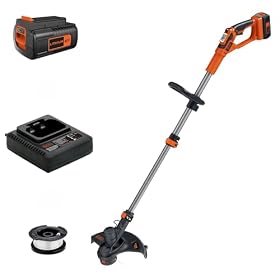
A quiet cordless string trimmer can make early-morning edging and light grass trimming less disruptive. Focus on the motor design, operating modes, line size, battery runtime, and how much cutting power your yard actually requires.
Quiet cordless trimmer for early morning
For early-morning yard work, a cordless string trimmer is usually less disruptive than a gas model because it avoids engine exhaust, fuel handling, and the high-pitched sound of a running combustion engine. However, no powered trimmer is silent: the cutting line still creates noise, and thicker grass requires more motor power. The best choice is a battery trimmer with a low-noise motor, a usable low-power mode, modest line diameter, and enough runtime to finish light trimming without repeated starts.
What makes a cordless trimmer quieter?
Several parts of a trimmer contribute to noise:
Motor and airflow: Brushless motors are often efficient and can run smoothly, but brushless does not automatically mean silent. Cooling fans, vents, and motor speed also affect sound.
Cutting line: The line produces a noticeable whir as it spins. Thicker line and higher speed generally create more cutting ability and more noise.
Cutting head: An unbalanced head, damaged spool, or incorrectly loaded line can cause vibration and extra sound.
Operating mode: A variable-speed trigger or low-speed setting lets you use less power for grass edging and light trimming.
Contact with hard surfaces: Striking concrete, fences, rocks, and metal creates sharp impact noise even when the motor itself is relatively quiet.
Manufacturers do not always publish comparable sound measurements, and sound levels can vary with distance, operating speed, and measurement method. Treat noise claims as useful guidance rather than a guarantee of how the trimmer will sound in your yard.
Features to prioritize for early-morning use
Variable-speed control
A variable-speed trigger is one of the most useful features for reducing disturbance. You can run the head more slowly when trimming short grass along a sidewalk and increase speed only when the line meets denser growth.
A simple two-speed selector can also work, but it gives you less control than a variable trigger. Avoid assuming that a trimmer with a high maximum speed must be used at that speed for every task.
A smaller or adjustable line diameter
Line diameter affects both cutting performance and sound. Smaller line is appropriate for light grass and edging and usually places less load on the motor. Larger line is better for heavier weeds but may require more power and produce a stronger cutting noise.
Check the manufacturer’s approved line sizes before buying replacement line. Using line that is too large can overload the trimmer, reduce runtime, or prevent the automatic feed system from working correctly.
Brushless motor
A brushless motor can improve efficiency, durability, and battery use compared with some brushed designs. It may also operate smoothly, but it is not by itself proof that a trimmer is quiet. Give more weight to the complete design, speed controls, head balance, and the manufacturer’s published noise information when available.
A battery platform that fits the job
Battery voltage or platform name does not tell you exactly how quiet a trimmer will be. It does affect the available power, battery size, and often the overall weight.
For occasional edging and short grass, a lighter battery may be easier to handle and sufficient for the job. For a larger lot or dense weeds, a higher-capacity battery can reduce interruptions, but it may add weight. Look for the manufacturer’s runtime information under conditions similar to your work; runtime varies with line size, grass density, speed, and battery capacity.
Low vibration and a balanced head
Vibration can make a trimmer seem louder and makes early-morning work less comfortable. Look for adjustable handles, a straight shaft or curved shaft that suits your posture, and a head that can be positioned without forcing your wrists into an awkward angle.
A shoulder strap can help with a heavier model, but it does not make the tool quieter. It is mainly an ergonomic feature.
Product prices and availability are accurate as of the date/time indicated and are subject to change. Any price and availability information displayed on Amazon.com at the time of purchase will apply to the purchase of this product.
Choosing the right power level
A compact cordless trimmer is generally a better fit for quiet early-morning maintenance when you are cutting:
Grass around paths, garden beds, and fences
Small patches of soft weeds
Lawn edges that have been maintained regularly
Areas where a mower cannot reach
You may need a more powerful trimmer—or a brush cutter for genuinely woody growth—if you regularly cut tall, dense weeds, thick vines, or tough stalks. Choosing an undersized trimmer can increase noise because you may need to run it continuously at full speed while the motor struggles.
For quiet use, do not select the smallest model solely because it appears less powerful. Choose a tool that can handle the actual vegetation at a moderate speed.
Product prices and availability are accurate as of the date/time indicated and are subject to change. Any price and availability information displayed on Amazon.com at the time of purchase will apply to the purchase of this product.
How to make any trimmer less disruptive
Even a relatively quiet cordless trimmer can disturb nearby homes. These practices help:
Check local quiet hours and neighborhood rules. Early-morning restrictions may apply even to battery tools.
Trim only the necessary areas. Edging a small section is less disruptive than clearing an entire overgrown boundary.
Use the lowest effective speed. Start low and increase speed only when the line begins to bog down.
Keep the head away from hard surfaces. Avoid bumping the line head against curbs, walls, fencing, and rocks.
Use sharp, correctly sized line. Old, brittle, tangled, or oversized line can increase vibration and motor load.
Keep the battery and head in good condition. A damaged head or loose component can create abnormal rattling.
Wear hearing protection. “Quiet” does not mean hearing-safe at close range, especially during extended work.
Product prices and availability are accurate as of the date/time indicated and are subject to change. Any price and availability information displayed on Amazon.com at the time of purchase will apply to the purchase of this product.
Cordless trimmer buying checklist
Before choosing a model, verify these specifications and design details:
Published sound information, if available, and the conditions used for the measurement
Variable-speed trigger or a lower-speed operating mode
Approved line diameters and replacement-line availability
Battery capacity and whether the battery and charger are included
Manufacturer-estimated runtime for trimming rather than an unrelated low-load task
Weight with the battery installed
Adjustable shaft or handle positions
Head-loading and line-feeding method
Warranty and access to replacement spools, heads, guards, and batteries
Whether the tool is intended for grass trimming only or can accept a brush-cutter attachment or blade
Do not compare battery runtime figures without checking whether they refer to the same battery capacity and operating conditions. A larger battery may last longer but can make the tool tiring to hold.
Product prices and availability are accurate as of the date/time indicated and are subject to change. Any price and availability information displayed on Amazon.com at the time of purchase will apply to the purchase of this product.
Troubleshooting unexpected noise
If a cordless trimmer suddenly becomes louder, stop the tool, remove the battery, and inspect it according to the manufacturer’s instructions.
Check the line and spool first
Look for crossed, tangled, uneven, or incorrectly sized line. Remove damaged line and reload the spool using the specified direction and length. A spool packed too tightly can produce vibration and feeding problems.
Inspect the head and guard
Check for grass wrapped around the head, cracks, loose fasteners, or a guard that is rubbing against the line. Do not operate the trimmer with a damaged guard or head.
Look for impacts and imbalance
A head that struck a rock, curb, or metal object may be bent or damaged. If the head wobbles, rattles, or continues to vibrate after the line is correctly loaded, replace the damaged part rather than continuing to run the tool.
Check the battery and motor area
Make sure the battery is fully seated and that the vents are not blocked by grass or debris. Do not open the battery pack or motor housing. Stop using the trimmer if you notice burning odor, smoke, repeated electrical cutouts, unusual arcing, or excessive heat; contact the manufacturer or a qualified service professional.
A replacement spool, head, or line is reasonable when the rest of the trimmer is in good condition and the problem is clearly limited to the cutting assembly. If the motor remains noisy or vibrates after the head and line are corrected, professional service or replacement of the trimmer may be more practical.
Bottom line
For early-morning trimming, prioritize a cordless model with variable speed, an appropriate light-duty line option, balanced handling, and a battery large enough for the job without making the tool unnecessarily heavy. Use low speed for light grass, avoid hard-surface impacts, follow local quiet-hour rules, and treat any sudden rattling or grinding as a reason to stop and inspect the trimmer.
FAQ
Are cordless string trimmers quieter than gas trimmers?
They are usually less disruptive because they do not have a combustion engine, but the spinning line, motor, cooling fan, and contact with hard surfaces still produce noise. A cordless trimmer should not be treated as silent.
What is the quietest type of string trimmer?
For light grass and edging, a battery-powered trimmer with variable speed, a balanced head, and a smaller approved line diameter is often a practical quiet-use configuration. Published sound measurements are more useful than motor labels alone.
Can I use a cordless trimmer before sunrise?
Check local ordinances, property rules, and neighborhood quiet hours first. Even a low-noise cordless tool may be restricted during early morning hours.
Does brushless mean a string trimmer is quiet?
Not necessarily. Brushless motors can be efficient and smooth, but total noise also comes from motor speed, cooling airflow, the cutting line, vibration, and impacts with hard surfaces.
Why did my cordless trimmer suddenly get loud?
Common causes include tangled or incorrectly loaded line, grass wrapped around the head, a loose or damaged guard, or an impact that bent the cutting head. Remove the battery before inspection, and stop using the tool if the motor continues to grind, rattle, overheat, or smell burned.