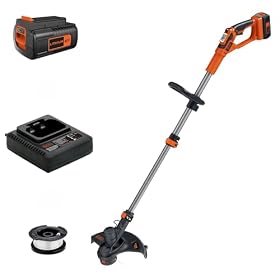
For spring ditch growth, prioritize stable footing and a trimmer suited to the vegetation—not simply the most powerful model. If the bank is slippery or the tool would be exposed to water, wait for safer conditions.
A string trimmer can clear grass and light weeds along a ditch, but a wet spring bank can be more dangerous than the cutting itself. Choose a model you can control from stable ground, and wait if the slope is soft, slick, or requires you to lean over the water. For routine grass and weeds, a string trimmer is usually the right tool; dense woody growth may call for a compatible brush-cutting setup or a different approach.
Choose power for the growth and the conditions
For ordinary grass and weeds, a battery-powered trimmer can be convenient and avoids managing a fuel engine on a slope. Check the manufacturer’s guidance for use in damp conditions, and do not operate or charge a battery tool in rain or where water can reach electrical components unless its instructions explicitly allow it.
A gas trimmer may suit longer sessions or heavier growth, but it is still only a good choice if you can handle its weight and vibration safely on firm ground. More power does not make a slippery bank safe. If you need to stand on the slope, reach far across the ditch, or work close to the water, postpone the job or use a safer method from stable ground.
A corded electric trimmer is generally a poor fit for a wet ditch area: the cord can snag or enter the cutting zone, and water raises electrical risk. Follow the tool’s instructions and avoid using it in wet conditions.
Match the cutting setup to the vegetation
Use a standard string-trimmer head for grass and soft weeds. A line that is too thick for the trimmer can overload it, while line that is too light may break frequently in coarse growth. Use only the line diameter and head configuration allowed by the manufacturer; wet vegetation does not change those limits.
For thick, woody weeds or brush, use a blade only if the trimmer is specifically designed for that attachment and has the required guard and other safety equipment. Do not improvise a blade conversion. If the ditch has saplings, tangled brush, or growth that blocks your view of the ground, a brush cutter or professional service may be more appropriate.
Product prices and availability are accurate as of the date/time indicated and are subject to change. Any price and availability information displayed on Amazon.com at the time of purchase will apply to the purchase of this product.
Make the ditch safer to trim
Wait until the ground is firm enough that your boots do not slide or sink. Wet grass and muddy banks can shift underfoot.
Keep both feet on stable ground where possible. Do not lean across the ditch or trim from an unstable edge.
Look for hidden wire, rocks, debris, wildlife, and standing water before starting. Keep people and pets well away from the cutting area.
Wear eye protection, sturdy footwear, long pants, and any additional protective equipment required by the manual. Use the trimmer’s guard and handle as designed.
Start with short, controlled passes and keep the cutting head below waist height. Stop if the line catches, the tool vibrates unusually, or footing becomes uncertain.
Follow the manual for wet vegetation and weather. If the manufacturer says not to use the tool in rain or wet conditions, wait for it to dry.
Product prices and availability are accurate as of the date/time indicated and are subject to change. Any price and availability information displayed on Amazon.com at the time of purchase will apply to the purchase of this product.
Decide whether to trim now or wait
If the bank is firm and you can work from a stable position, a string trimmer with the correct line can handle typical ditch grass and weeds. If the bank is slick, the vegetation hides hazards, or you would need to reach over water, waiting for drier conditions is the safer decision. For a steep or inaccessible ditch, consider a professional rather than risking a fall.
Replace worn or incompatible line, spool, or head parts with components approved for your trimmer. If the growth regularly exceeds what the manufacturer permits for the machine, choose a suitable brush cutter or other tool instead of forcing the trimmer to do the job.
Product prices and availability are accurate as of the date/time indicated and are subject to change. Any price and availability information displayed on Amazon.com at the time of purchase will apply to the purchase of this product.
FAQ
Can I use a string trimmer on wet grass in a ditch?
Only if the manufacturer permits use in those conditions and you can maintain secure footing. Do not use a trimmer in rain or wet conditions when its instructions prohibit it, and wait if the bank is slippery or soft.
Is a battery or gas trimmer better for ditch edges?
Either may work for grass and light weeds on stable ground. Choose based on the job’s duration, the tool’s weight, and its operating instructions; neither type makes an unstable wet bank safe.
Should I use a blade for thick ditch weeds?
Use a blade only if the trimmer is designed for that attachment and you have the specified guard and protective equipment. For dense brush or hidden hazards, a different tool or professional service may be safer.