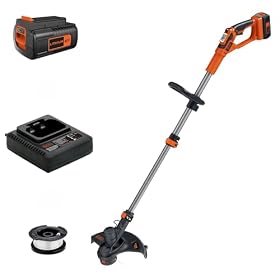
The best cordless string trimmer depends on your grass, weeds, yard size, and existing battery platform. Use this guide to compare power, runtime, handling, line systems, and replacement-part availability before you buy.
A cordless string trimmer is usually the best choice for routine lawn edging and grass trimming when you want less maintenance and noise than a gas model. The right one depends mainly on the size and thickness of the vegetation, how much trimming you do at once, and whether you already own batteries from a compatible outdoor-power-tool platform.
For most homeowners, prioritize a manageable weight, a reliable battery system, an adjustable shaft, and a trimmer head that is easy to reload. If you regularly cut tall weeds, thick grass, or brush, choose a higher-power model with a larger line capacity rather than the lightest option.
Quick buying advice
Small yards and light grass: Choose a lightweight trimmer with a smaller battery and simple bump-feed head.
Medium or large yards: Look for a larger battery option, comfortable harness or handle, and readily available replacement spools or line.
Thick weeds and overgrown areas: Choose a model approved for thicker trimmer line and, where appropriate, a compatible brush-cutter blade. Follow the manufacturer’s instructions for any blade conversion.
If you already own cordless tools: Staying within the same battery platform can reduce the cost of buying batteries and chargers.
For edging: An adjustable head or shaft and a clearly marked edge position are more useful than maximum motor power.
What makes a cordless string trimmer a good choice?
Battery platform and runtime
Battery voltage alone does not tell you exactly how long a trimmer will run. Runtime is affected by battery capacity, grass density, line diameter, cutting width, and how aggressively you operate the tool. A larger-capacity battery generally provides more working time but also adds weight.
If you already own compatible batteries, a bare-tool purchase may be practical. Check that the battery is approved for the exact trimmer and that the charger is compatible. For a larger property, consider buying a second battery if the manufacturer offers one; swapping batteries is often more convenient than waiting for a recharge.
Avoid choosing a battery solely because it has a higher advertised capacity. Check the complete tool weight with the battery installed, along with the manufacturer’s stated runtime conditions.
Motor power and cutting ability
A light-duty trimmer can handle lawn edges, thin grass, and occasional weeds. It may slow down in tall, wet, or dense growth. Models intended for heavier work typically offer stronger motors, sturdier shafts, larger line capacity, or support for thicker line.
More power is not always better. A heavier trimmer can cause fatigue during edging, and aggressive cutting can use line and battery capacity faster. Match the tool to the work rather than buying the largest model for a small lawn.
Cutting swath
Cutting swath is the width cleared by each pass. A wider swath can reduce the number of passes across an open area, but it may be less convenient around garden beds, fences, trees, and narrow borders.
For detailed edging and tight spaces, a moderate cutting width can be easier to control. For large, open areas, a wider swath may save time if the motor and battery can maintain it under load.
Trimmer line diameter
Thicker line generally lasts longer against tough vegetation and hard surfaces, but it requires more motor power and can reduce runtime. Thin line is suitable for light grass and often feeds easily.
Use only the line diameter and line type specified by the manufacturer. Installing oversized line can overload the motor or prevent the head from feeding correctly. The line’s shape also matters: round line is commonly easy to reload, while other profiles may be intended to improve cutting performance but can behave differently in the head.
Feed system
The main choices are bump feed, automatic feed, and fixed-line systems.
Bump feed: Tap the head on the ground to release more line. It is familiar and usually simple to operate.
Automatic feed: The tool releases line according to its control system. This can be convenient, but replacement spools may cost more and must match the trimmer.
Fixed line: Short precut pieces are installed in the head. This can be useful for heavy vegetation, but it requires keeping the correct replacement line available.
A bump-feed head is often the most practical choice for homeowners because bulk trimmer line can be less expensive and the head can usually be reloaded without buying a proprietary spool.
Weight, balance, and adjustment
Look beyond the advertised tool weight. A battery, guard, line, and optional shoulder strap all affect how the trimmer feels. A well-balanced tool can be more comfortable than a lighter tool that is motor-heavy or difficult to control.
Useful adjustments include:
Variable-speed trigger or power settings
Adjustable shaft length
Rotating head for edging
Adjustable front handle
Shoulder strap or harness attachment
A guard that protects the operator without blocking visibility
If several people will use the trimmer, prioritize broad adjustment range and a comfortable handle position.
Product prices and availability are accurate as of the date/time indicated and are subject to change. Any price and availability information displayed on Amazon.com at the time of purchase will apply to the purchase of this product.
Which cordless string trimmer is best for your yard?
Best for a small suburban lawn
Choose a compact trimmer with a light battery, straightforward bump-feed head, and adjustable shaft. A smaller tool is easier to carry around flower beds and sidewalks, and it may be sufficient for weekly grass trimming.
Do not pay extra for brush-cutting capability unless you actually need it. Additional power and attachments can add weight and cost without improving routine edging.
Best for a medium-size yard
A mid-duty model with a removable battery, moderate cutting width, and readily available replacement line is a practical middle ground. Look for a second battery option if trimming and edging usually take longer than one charge.
A two-speed or variable-speed control can help conserve battery power during light work while providing more power for dense patches.
Best for large yards
Prioritize the battery ecosystem and serviceability. A model with interchangeable batteries, a comfortable harness, and a head that holds enough line can reduce interruptions. If the property includes slopes or large areas of tall vegetation, balance and fatigue resistance matter as much as peak power.
Check the manufacturer’s runtime information under conditions similar to your yard. Runtime estimates made with light grass and a narrow line may not represent heavy weeds or continuous full-power use.
Best for thick weeds and light brush
Choose a heavy-duty trimmer approved for thicker line and the specific cutting attachments you need. If a model accepts a brush-cutter blade, verify that the blade, guard, handle, harness, and operating procedure are all approved for that tool.
A string trimmer is not automatically a brush cutter. Do not install an unapproved blade or remove the guard. For woody growth, dense brush, or large overgrown areas, a dedicated brush cutter may be safer and more suitable.
Product prices and availability are accurate as of the date/time indicated and are subject to change. Any price and availability information displayed on Amazon.com at the time of purchase will apply to the purchase of this product.
Features worth paying for
A brushless motor: Often chosen for efficiency and durability, though the complete tool design still determines performance.
Variable speed: Helps control noise, line consumption, and battery use.
Tool-free handle adjustment: Useful when multiple operators share the trimmer.
Easy line loading: A head that accepts bulk line can simplify maintenance.
Battery charge indicator: Helps avoid starting a job with an almost depleted battery.
Good parts availability: Check for replacement spools, bump knobs, guards, batteries, and chargers before buying.
A shoulder strap or harness point: Particularly useful on heavier models or sloped properties.
Features such as an automatic spool system or proprietary line can be convenient, but they may limit your replacement choices. Consider ongoing consumable availability before choosing a specialized head.
Product prices and availability are accurate as of the date/time indicated and are subject to change. Any price and availability information displayed on Amazon.com at the time of purchase will apply to the purchase of this product.
Cordless string trimmer safety and maintenance
Wear eye protection, sturdy shoes, and long pants. Keep people and pets away from the cutting area because line can throw stones, mulch, and other debris. Inspect the area before trimming and avoid operating near windows, vehicles, and fragile landscaping.
Before clearing a jam, changing line, removing a guard, or inspecting the head, release the trigger and remove the battery. Follow the manufacturer’s instructions for blade use, maintenance, charging, and storage.
After use:
Remove the battery before cleaning or transport.
Brush grass and debris away from the guard and head.
Check the line head, bump knob, guard, and shaft for damage.
Store batteries in the temperature conditions specified by the manufacturer.
Keep the line head free of packed wet grass, which can cause feeding and balance problems.
Product prices and availability are accurate as of the date/time indicated and are subject to change. Any price and availability information displayed on Amazon.com at the time of purchase will apply to the purchase of this product.
Common cordless trimmer problems
The trimmer has power but will not spin
Remove the battery and inspect the head for wrapped grass, string, wire, or other debris. Check that the line head is installed correctly and that the guard is not rubbing against it. Reinstall the battery and try the tool only after the head is clear.
If the battery is charged and the head is clear but the motor still does not operate, check the lockout and trigger procedure in the manual. Persistent failure can indicate a switch, battery-contact, control, or motor problem. Do not bypass a safety switch; contact the manufacturer or a qualified repair service.
The line will not feed
The most common causes are an incorrectly wound spool, line that is too thick, line fused by heat, or a bump knob packed with debris. Remove the battery, open the head, and verify the winding direction and line size against the manual.
If the line is stuck, replace damaged or fused line rather than forcing the head. A worn eyelet, bump knob, or spool can also prevent feeding and may justify replacing the head or the affected part.
The trimmer loses power quickly
Dense or wet vegetation, a larger line diameter, a wide cutting swath, and continuous full-speed operation all increase battery use. Clean the head and guard, confirm that the line is the approved size, and try a lower speed for light work.
If the battery becomes unusually hot, swells, smells abnormal, or shows physical damage, stop using it and follow the manufacturer’s battery-safety instructions. Replace a battery that no longer holds a useful charge if the trimmer and charger are otherwise functioning normally.
The trimmer vibrates or cuts unevenly
Stop the tool and remove the battery. Check for a partly broken line, an unevenly wound spool, a damaged head, debris inside the guard, or a bent shaft. Replace damaged cutting components. Continued vibration after those checks is a reason to stop using the trimmer and arrange service.
When should you replace the trimmer?
Replace the unit when the motor or control system has failed, the shaft or head is damaged beyond a simple parts replacement, or compatible batteries and replacement parts are no longer available. A new head, spool, bump knob, guard, or battery is usually the more reasonable fix when the main motor and shaft remain in good condition.
Before replacing the entire trimmer, compare the cost and availability of the failed part with the price of a compatible replacement tool. Keep the battery platform in mind: staying with the same system may let you continue using existing batteries and chargers.
FAQ
Are cordless string trimmers powerful enough for tall weeds?
Many are, but performance depends on motor design, battery capacity, line diameter, and vegetation density. For tall weeds and light brush, choose a heavy-duty model approved for thicker line and use only the cutting attachments specified by the manufacturer.
Should I choose a brushless cordless string trimmer?
A brushless motor can be an appealing choice for efficiency and durability, especially for frequent or heavier use. It is not the only factor that determines performance, so also compare balance, battery compatibility, line capacity, and parts availability.
Is a larger battery always better for a string trimmer?
A larger-capacity battery can provide more runtime, but it usually adds weight. Choose enough capacity for your trimming session and consider a second compatible battery for longer jobs.
What size trimmer line should I use?
Use the diameter and line type listed in the trimmer’s manual. Thicker line can handle tougher growth but may require more power and reduce runtime; oversized line can cause feeding or motor problems.
Can I use a brush-cutter blade on any cordless string trimmer?
No. Use a blade only when the manufacturer specifically approves that attachment for the exact trimmer and supplies the required guard, handle, harness, and installation instructions. Otherwise, use string line or a dedicated brush cutter.