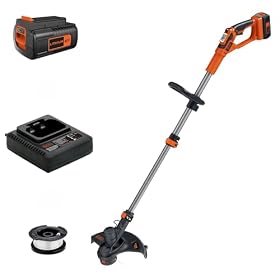
The best string trimmer for thick weeds has enough torque for dense growth, supports a durable line, and remains controllable when the cutting head meets heavy vegetation. Use this guide to choose between gas, battery, and corded models.
Best string trimmer for thick weeds
The best string trimmer for thick weeds is one with strong torque, a cutting head that accepts thicker line, and enough runtime or fuel capacity to finish the job. For large, overgrown areas, a gas or high-voltage battery model is usually more capable than a lightweight household trimmer. The right choice also depends on weed thickness, yard size, noise limits, and whether the trimmer can accept a blade or brush-cutter attachment.
What to look for
Power source
Gas string trimmers are often a practical choice for large properties and dense, tall weeds. They can run as long as fuel is available and generally do not depend on battery charging. However, they require fuel mixing or storage, produce exhaust, and need more maintenance than electric models.
Battery string trimmers are quieter, easier to start, and simpler to maintain. Look for a model designed for heavy-duty cutting rather than light edging. Battery capacity affects runtime, while the motor and drive system affect how well the trimmer maintains cutting speed in thick growth. A second battery may be more useful than choosing a physically larger battery if the job covers a large area.
Corded electric trimmers can handle ordinary weeds when an outdoor-rated extension cord is available, but the cord limits movement and can be inconvenient in heavy brush. They are generally better suited to smaller yards and occasional maintenance than to clearing large areas of dense growth.
Line diameter
Line diameter is one of the most important specifications for thick weeds. Thin line is efficient for grass and light edging but can break quickly against woody stems, tall weeds, fences, and hard surfaces. A trimmer that supports thicker line is usually better suited to rough growth.
Do not install line that exceeds the diameter or type listed in the owner's manual. Oversized line can overload the motor, reduce cutting speed, prevent the head from feeding correctly, or create a safety hazard. Square, twisted, and other line profiles may cut differently, but compatibility with the head matters more than the profile name alone.
Cutting head and feed system
A bump-feed head lets you advance line by tapping the head against the ground. It is convenient during long sessions, but the mechanism can jam if packed with debris or wound incorrectly.
Fixed-line heads use pre-cut pieces of line. They can be useful in rough vegetation because they have fewer moving parts and can be quicker to reload. Some heavy-duty heads are designed for short lengths of thick line or other approved cutting media.
Automatic-feed systems can be convenient, but they may use more line than necessary. Whichever system you choose, confirm that replacement spools or line are readily available and that the head is designed for the trimmer.
Ability to use a blade
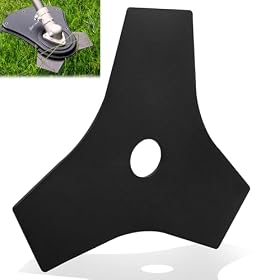
If the weeds include thick stalks, vines, saplings, or brush, a trimmer that supports an approved metal blade or brush-cutter attachment may be a better fit than a line-only model. Blade compatibility is not universal. The trimmer must be specifically designed for the attachment, and the correct guard, harness, hardware, and handle configuration must be used.
Do not install a blade on a trimmer unless the manufacturer explicitly permits it. A line trimmer that is not designed for blade use may lack the required protection and control.
Gas, battery, or corded: which is best?
Choose gas for large, difficult areas
A gas model is worth considering when you regularly clear tall, dense weeds across a large property, cannot easily recharge batteries, or need long uninterrupted work sessions. It is less attractive if you want low maintenance, quiet operation, or easy starting.
Choose battery for most residential heavy-duty work
A higher-power battery trimmer is often the most convenient option for homeowners dealing with thick weeds around a typical property. It avoids fuel handling and is easier to store. Check the battery system, included battery, charger requirements, and the manufacturer's stated compatibility before comparing models.
A battery trimmer may lose cutting performance as the battery charge falls, especially in heavy vegetation. Keeping a charged spare can help, but batteries add cost and should be stored and charged according to the manufacturer's instructions.
Choose corded electric for small areas
A corded model makes sense for a small yard with accessible outdoor outlets and relatively short cutting sessions. It is usually not the best choice for remote corners, large lots, or areas where the cord could contact the cutting head.
Features that improve control
Thick weeds can make a trimmer twist, bounce, or pull sideways. Look for features that help you control the tool rather than focusing only on maximum power:
- Adjustable handle or loop handle: Helps position the trimmer for comfortable, controlled cutting.
- Bike-style handles: Often provide better leverage for extended clearing, particularly on heavier models.
- Shoulder harness: Transfers some of the tool's weight away from your arms. Use the harness specified for the tool and adjust it before cutting.
- Variable-speed trigger: Lets you reduce speed near fences, trees, and ornamental plants while using more power in dense growth.
- Debris guard: Must match the cutting head and line or blade configuration. Never remove it to increase the cutting swath.
- Straight shaft: Can provide useful reach under shrubs and may be preferred for demanding work, though shaft design alone does not determine cutting power.
When a string trimmer is not enough
A line trimmer is not the right tool for every type of growth. Consider a brush cutter, clearing saw, or other purpose-built tool when the area contains widespread woody stems, saplings, heavy vines, or vegetation too thick to cut safely with line.
If a trimmer repeatedly stalls, overheats, or cannot maintain cutting speed even with the correct line and a clean head, stop forcing it. The model may be undersized for the work. A larger approved cutting system or a professional clearing service may be safer and more economical than repeated repairs.
Buying checklist
Before choosing a model, verify:
- The power source fits the size of the property and available charging or fuel options.
- The manual allows a line diameter suitable for the weeds you need to cut.
- Replacement line, spools, and heads are available.
- The included guard matches the cutting head.
- A harness or shoulder strap is included or available if the tool is heavy.
- The battery, charger, or fuel requirements fit your existing equipment.
- Blade or brush-cutter use is explicitly approved if you need to cut woody growth.
- The handle and shaft configuration feel controllable for the intended work.
For most homeowners, a capable battery trimmer with thick-line support is the easiest all-around choice. Choose a gas model when the area is large or the work is frequent and demanding, and choose a blade-capable brush-cutter system when the growth has become too woody for ordinary trimmer line.