Cordless string trimmers are usually the better choice for small and medium residential yards because they start instantly, make less noise, and require less maintenance. Gas string trimmers can still be the better fit for large properties, long cutting sessions, dense weeds, and users who do not want to manage battery runtime. Compare the power source, not just the advertised cutting width, before choosing.
Power Source · Mon Sep 07
Cordless versus gas string trimmers
Cordless trimmers are quieter, cleaner, and easier to start, while gas trimmers remain useful for long sessions, heavy weeds, and areas without convenient battery charging. The right choice depends on your yard size, vegetation, storage, and tolerance for maintenance.
What do you need help with?
Open an answer, or tell us what we should cover next.
Answered in this guide
Choose between a cordless and gas string trimmer
Choose cordless for quieter, cleaner, easier trimming and gas for long sessions, heavy weeds, or places without convenient charging. Yard size, vegetation, storage, and your tolerance for maintenance should guide the decision.
Compare cordless and gas cutting performance
Both types handle ordinary grass when properly matched to the job. Gas can be more useful for dense, wet, tall, or woody vegetation, while cordless models suit routine trimming and lighter work.
Compare runtime, charging, and refueling needs
Cordless trimmers require battery capacity, charging time, or spare batteries. Gas trimmers can continue running with available fuel, making them better suited to long jobs without charging interruptions.
Understand the maintenance each trimmer needs
Cordless trimmers generally need less routine maintenance but still require cleaning after use. Gas trimmers need more engine-related care, including fuel and starting-system maintenance.
Compare the cost of owning each type
Compare more than the purchase price: cordless ownership may include a battery and charger, while gas ownership includes fuel and engine upkeep. The lower long-term cost depends on how often and how hard you trim.
Need something else?
Request a topic and help us choose what to build next.
Replace the line on a string trimmer
Fix a gas string trimmer that will not start
Choose between 18V and 40V cordless trimmersRead this guide →
Requests help us prioritize the next guide. No email required.
One anonymous request per topic.
Cordless versus gas string trimmers at a glance
| Factor | Cordless string trimmer | Gas string trimmer |
|---|---|---|
| Starting | Push-button or trigger start | Pull-start in many designs, though starting systems vary |
| Noise | Lower noise than gas models, but still requires hearing protection in some conditions | Louder engine noise; hearing protection is important |
| Maintenance | Keep the battery charged, clean the head, and inspect the line | Requires fuel handling, air-filter and spark-plug care, engine maintenance, and winter storage |
| Runtime | Limited by battery capacity, cutting conditions, and the number of batteries available | Limited mainly by fuel and the operator’s endurance |
| Emissions | No direct exhaust at the work area | Produces exhaust while running |
| Weight and balance | Varies widely; the battery adds weight near the rear of the tool | Engine and fuel affect weight and balance |
| Best fit | Routine lawn edging, grass trimming, and smaller properties | Extended work, thick growth, and larger areas |

Cordless string trimmer options
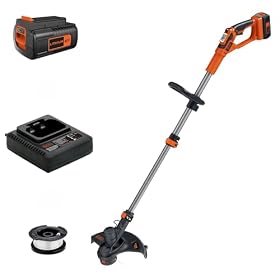 BLACK+DECKER 40V MAX 13 in String Trimmer Edger Cordless with Adjustable Telescoping Pole, 2 in…BLACK+DECKER
$159.00 as of
View on Amazon Black+Decker 40V MAX 13 Inch String Trimmer and Lawn Edger with Battery and Charger, Cordless…BLACK+DECKER
$99.00 as of
View on Amazon CRAFTSMAN V20 Weed Wacker Cordless String Trimmer and Edger, Weed Eater Includes 2.0 Ah Battery…CRAFTSMAN
$117.00 as of
View on Amazon
Product prices and availability are accurate as of the date/time indicated and are subject to change. Any price and availability information displayed on Amazon.com at the time of purchase will apply to the purchase of this product.
When a cordless string trimmer makes more sense
A cordless model is often the practical choice when convenience matters more than uninterrupted runtime. There is no fuel to mix or store, no carburetor to maintain, and no pull-start procedure. For occasional trimming around beds, fences, sidewalks, and trees, that simplicity can outweigh the limitations of a battery.
Cordless trimmers are especially useful when:
- You have a small or medium-sized yard.
- You already own compatible batteries from the same outdoor power-tool system.
- You trim in a neighborhood where noise is a concern.
- You want to avoid fuel spills, exhaust, and seasonal engine storage.
- You prefer a tool that can be put away after charging with little additional preparation.
Battery voltage alone does not tell you exactly how long a trimmer will run. Runtime depends on battery capacity, line diameter, grass density, cutting technique, speed setting, temperature, and battery age. A higher-capacity battery generally provides more operating time but also adds weight and cost.
If you have a larger yard, check whether the tool is sold with a battery and charger or as a tool-only package. A tool-only purchase may be a good value if you already have compatible batteries, but it can cost more than expected if you must buy the battery and charger separately.
Gas string trimmer options
 Grass Gator 3630 Universal Bump & Feed Trimmer Head Replacement for Straight Shaft Gas Trimmers…Grass Gator
$22.99 as of
View on Amazon Grass Gator 8010 Load n' Cut Replacement String Trimmer Head | Easy Line Reload |…Grass Gator
$17.99 as of
View on Amazon Husqvarna 525iLK Straight Shaft 40V Battery Powered Trimmer, Lawn ToolsHusqvarna
$449.99 as of
View on Amazon
Product prices and availability are accurate as of the date/time indicated and are subject to change. Any price and availability information displayed on Amazon.com at the time of purchase will apply to the purchase of this product.
When a gas string trimmer makes more sense
Gas trimmers remain useful for demanding work where battery changes or charging would interrupt the job. A properly maintained gas engine can keep running as long as you have the correct fuel and need a break, making this type practical for large lots, acreage, fence lines, and heavy vegetation.
Consider gas when:
- You regularly trim for long periods without access to charging.
- Your property has thick weeds, tall grass, or light brush.
- You do not want to buy or carry multiple batteries.
- You already maintain other gas-powered outdoor equipment.
- The trimmer will be used far from a building or electrical outlet.
Gas power does not automatically mean unlimited cutting ability. The line size, cutting-head design, engine output, shaft configuration, and operator technique also affect performance. Dense growth may require slower passes, heavier line, or a model designed for brush-cutting attachments.
Gas equipment also demands more preparation. Use the fuel specified by the manufacturer, follow storage instructions, and avoid storing fuel in unsafe conditions. If the engine is hard to start, runs poorly, or leaks fuel, stop using it until the problem is corrected.
Extra runtime for cordless tools
 Bamse 2.0Ah Battery for 21V String Trimmer Cordless(BAT00043)Bamse
$15.99 as of
View on Amazon AJC Battery Compatible with Black & Decker CST1000 Type 4 Cordless String Trimmer 12V 7Ah…AJC
$30.79 as of
View on Amazon AGUTEGUTE Weed Wacker Replacement Battery (4.0 Ah Battery),Suitable Weed Wacker, Weed Whacker Eater,Lawn Trimmer.AGUTEGUTE
$67.99 as of
View on Amazon
Product prices and availability are accurate as of the date/time indicated and are subject to change. Any price and availability information displayed on Amazon.com at the time of purchase will apply to the purchase of this product.
Power and cutting performance
For ordinary grass edging, both power sources can work well when the trimmer is correctly matched to the job. The difference becomes more noticeable when the vegetation is dense, wet, tall, or woody.
A cordless trimmer may lose cutting speed as the battery charge falls, depending on its control system and operating mode. Using an unnecessarily thick line can also increase load and reduce runtime. Gas models can deliver sustained engine power, but they may bog down if the line is too long, the head is obstructed, or the vegetation exceeds the tool’s design.
Look beyond power-source labels and check:
- Maximum line diameter: Larger line can handle tougher vegetation, but it may require more power and may not be compatible with every head.
- Cutting swath: A wider swath covers more area per pass but can use more energy and line.
- Speed control: Variable speed can help conserve battery power or reduce line consumption during light work.
- Shaft design: Straight and curved shafts affect reach, balance, and compatibility with some attachments.
- Head type: Bump-feed, automatic-feed, and fixed-line heads have different loading and operating requirements.
- Attachment capability: Only use brush-cutter blades or other attachments if the manufacturer specifically permits them and provides the required guard and hardware.
Replacement cutting line
 DY.2ten Heavy Duty Nylon - Steel Grass Trimmer Line 0.095in 49.2ft Round Replacement Strimmer String…DY.2ten
$8.59 as of
View on Amazon Oregon Magnum Gatorline 095 Trimmer Line Heavy Duty, .095" x 50-FootOregon
$13.86 as of
View on Amazon BLACK+DECKER Weed Eater String, Genuine OEM Authentic Trimmer Line, 3-Pack, 30-Feet of Replacement Spool, 0.065-Inch…BLACK+DECKER
$14.99 as of
View on Amazon
Product prices and availability are accurate as of the date/time indicated and are subject to change. Any price and availability information displayed on Amazon.com at the time of purchase will apply to the purchase of this product.
Runtime, refueling, and charging
Runtime is the most important cordless limitation. Before buying, estimate how long you normally trim and compare that with the manufacturer’s runtime guidance under conditions similar to your work. Published runtime may be measured under light-load conditions, so thick weeds and frequent full-speed operation can shorten it.
For longer jobs, practical options include:
- Buying a second compatible battery.
- Choosing a higher-capacity battery if the added weight is acceptable.
- Taking charging time into account between work areas.
- Keeping the battery within the temperature range specified by the manufacturer.
Gas trimmers avoid battery charging, but refueling introduces its own tasks. Fuel can degrade during storage, and incorrect fuel or stale fuel can cause starting and running problems. Follow the engine maker’s fuel and storage instructions rather than relying on a general fuel mixture or additive recommendation.
Noise, emissions, and comfort
Cordless trimmers generally produce less noise and no direct exhaust while operating. They can be more comfortable for short residential jobs and less disruptive near homes, neighbors, and outdoor living spaces. They are not silent, however: the cutting head striking vegetation and the motor operating at high speed can still create hazardous sound levels.
Gas trimmers create engine noise, vibration, and exhaust. Hearing and eye protection are important with either type, and long-sleeve clothing, long pants, sturdy footwear, and gloves are sensible when trimming near hard surfaces or dense growth.
Comfort also depends on balance. A cordless model with a large battery may feel rear-heavy, while a gas model’s engine and fuel tank can create a different balance point. If possible, pay attention to shoulder-strap compatibility, handle adjustment, shaft length, and trigger position.
Maintenance differences
Cordless maintenance
Cordless trimmers usually need less routine maintenance, but they are not maintenance-free. After use:
- Remove grass and debris from the head and guard.
- Inspect the line, spool, guard, and shaft for damage.
- Remove the battery before clearing a jam or working near the cutting head.
- Store batteries according to the manufacturer’s temperature and charging guidance.
- Keep battery contacts dry and clean.
Do not use a damaged battery, charger, guard, or power connector. If the battery becomes unusually hot, swollen, cracked, or damaged, stop using it and follow the manufacturer’s disposal or service instructions.
Gas maintenance
Gas trimmers typically require more regular attention. Depending on the design, maintenance can include air-filter cleaning or replacement, spark-plug service, fuel-system care, lubrication, and preparation for storage. Always shut off the engine, allow hot parts to cool, and disconnect the spark-plug lead when the manufacturer directs you to do so before servicing.
Fuel-related problems are common after extended storage. If a gas trimmer will not start, verify the fuel condition, switch and choke settings, primer procedure, and spark-plug condition according to the manual. Do not keep pulling the starter indefinitely if the engine smells strongly of fuel or appears flooded.
Which type costs less to own?
The purchase price alone does not settle the question. A cordless trimmer may require a battery and charger, especially when sold as a tool-only package. Replacement batteries can be a significant future expense, although a shared battery platform may reduce the cost if you already own compatible tools.
A gas trimmer may have continuing costs for fuel, oil or fuel treatment where applicable, spark plugs, filters, and repairs. It also takes more time to maintain. The lower long-term cost depends on how often you trim, how long you keep the equipment, and whether you already own batteries or gas equipment in the same system.
A useful comparison is the complete setup cost:
- Trimmer
- Battery and charger, or fuel and related supplies
- Replacement line and spools
- Likely maintenance parts
- Any shoulder strap, blade-compatible hardware, or extra battery needed for your work
Choosing based on your yard
Small suburban yard
Choose cordless if your main jobs are edging sidewalks, trimming around landscaping, and cutting ordinary grass. A smaller battery may be adequate if you can recharge between uses.
Medium yard with regular trimming
Either type can work. Cordless is usually more convenient when the property can be completed within the available battery runtime. Gas may be preferable if the yard has dense weeds or the work often extends beyond one charge.
Large property or acreage
Gas is often more convenient for long, continuous sessions, particularly when the property has no convenient charging location. A cordless setup can still work if you have several compatible batteries and a practical charging plan.
Heavy weeds and light brush
Compare the manufacturer’s approved line size, power rating, guard, and attachment options. Do not install a metal blade or other cutting accessory unless the trimmer is specifically designed and equipped for it. For substantial brush, a dedicated brush cutter may be safer and more suitable than a general-purpose string trimmer.
Bottom line
Choose a cordless string trimmer for quieter operation, easier starting, lower routine maintenance, and typical residential trimming. Choose a gas string trimmer for long sessions, large properties, heavy growth, and situations where battery charging is inconvenient. If both types meet your cutting needs, the deciding factors are usually battery-platform compatibility, runtime, noise tolerance, fuel maintenance, and total ownership cost—not the power source by itself.
FAQ
Are cordless string trimmers powerful enough for thick weeds?
Many are capable of handling thick weeds when fitted with the line size and head approved by the manufacturer. For frequent heavy growth, compare the tool’s permitted line diameter, power settings, runtime, and attachment capability. A brush cutter may be more appropriate for woody vegetation.
Do cordless string trimmers need less maintenance than gas models?
Yes, generally. Cordless models still need cleaning, line and head inspection, and proper battery storage, but they avoid many gas-engine tasks such as fuel-system care, air-filter service, and spark-plug maintenance.
Is a gas string trimmer better for a large yard?
Often, because it can run continuously with refueling instead of waiting for batteries to charge. A cordless trimmer can also suit a large yard if you have enough compatible batteries and a practical charging plan.
Can I use any battery with a cordless string trimmer?
No. Use only batteries approved for that trimmer and its battery platform. The battery must match the manufacturer’s voltage, connector, and compatibility requirements.
Which type is easier to start?
Cordless models usually start with a trigger or button. Gas models require the manufacturer’s starting procedure, which may involve a primer, choke, and pull starter, although starting features vary by model.