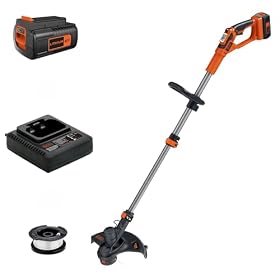
An 18V trimmer is usually easier to handle and suits light maintenance, while a 40V model is the better fit for thicker grass, larger areas, and longer cutting sessions. The right choice depends on more than voltage alone.
What do you need help with?
Open an answer, or tell us what we should cover next.
Answered in this guide
Compare 18V and 40V cordless trimmers
An 18V trimmer generally suits small yards, light grass, edging, and shorter sessions. A 40V model is usually better for larger areas, dense grass, heavy weeds, and longer cutting sessions, though it may be heavier.
Choose 18V for manageable lawns, light trimming, and easier handling. Choose 40V when you regularly cut thick grass, heavy weeds, larger areas, or need longer sessions. Consider a different tool if the workload exceeds a trimmer’s limits.
Calculate battery energy for a fair runtime comparison
Compare battery watt-hours rather than amp-hours alone when looking across voltage platforms. Estimate stored energy by multiplying volts by amp-hours, then remember that actual runtime also depends on cutting width, line, head design, and workload.
Check whether batteries and chargers will work together
Do not assume batteries are interchangeable because their voltage numbers look similar. Confirm that the trimmer, battery pack, charger, rails, contacts, electronics, and protection system belong to the same compatible platform.
Request a topic and help us choose what to build next.
Compare the total ownership cost of 18V and 40V
Maintain the line and trimmer head for better cutting
Decide whether a cordless or gas trimmer fits your yard
Requests help us prioritize the next guide. No email required.
One anonymous request per topic.
An 18V cordless trimmer is usually the better choice for light grass, small yards, and occasional edging. A 40V model generally offers more reserve for thick weeds, heavy growth, and larger areas, but it may be heavier and more expensive. Compare the battery platform, cutting workload, tool weight, and replacement-battery cost—not voltage alone.
18V versus 40V at a glance
Consideration
18V cordless trimmer
40V cordless trimmer
Best suited to
Small yards, edging, light grass
Larger yards, thick grass, heavier weeds
Handling
Usually lighter and easier to maneuver
Often heavier, especially with a larger battery
Cutting reserve
Adequate for routine trimming
Better suited to demanding growth and longer sessions
Battery platform
Useful if you already own compatible 18V tools
Useful if you already own compatible 40V tools
Battery and charger cost
Can be lower, depending on the platform
Can be higher because batteries store more energy and may be larger
Main limitation
May bog down sooner in dense growth
Added weight may cause fatigue during edging
These are general tendencies, not guarantees. Motor design, line diameter, cutting width, gearing, guard design, and automatic power management can make two trimmers with the same voltage perform differently.
What the voltage actually tells you
Voltage describes the electrical potential of the battery system. It does not directly tell you how long the trimmer will run or how much grass it can cut.
A higher-voltage system can support a motor with more power reserve, but actual performance also depends on:
Battery capacity: Amp-hours, commonly shown as Ah, affect how much energy the battery stores. A higher-voltage battery with a small capacity may not run as long as a lower-voltage battery with a larger capacity.
Motor and controls: Brushless motors and electronic power management can improve efficiency and maintain performance under changing loads.
Line and head design: Thick or tangled line, a wide cutting swath, and a heavy head can increase the load on the motor.
Grass conditions: Damp, tall, dense, or woody growth requires more energy than routine edging.
Operator technique: Holding the head too low, cutting too much at once, or letting long line drag on hard surfaces can reduce runtime and performance.
Treat voltage as a rough indication of the tool class rather than a complete performance specification.
Product prices and availability are accurate as of the date/time indicated and are subject to change. Any price and availability information displayed on Amazon.com at the time of purchase will apply to the purchase of this product.
When an 18V trimmer makes more sense
Choose an 18V model when most of your work involves maintaining an already manageable lawn. It is often a practical fit for:
Small lots or townhome yards
Edging sidewalks, driveways, and garden beds
Short trimming sessions
Light grass and occasional weeds
Users who prioritize lower weight and easy handling
Households that already own batteries from the same 18V tool platform
The lower weight can matter more than extra power when the job involves frequent edging or trimming around trees, fences, and landscaping. A lighter tool is also easier to control for users who have limited upper-body strength or who prefer shorter sessions.
An 18V trimmer may become frustrating if you regularly cut tall, wet grass or thick weeds. It can still complete the job, but you may need to work more slowly, make multiple passes, or stop when the battery becomes depleted.
Product prices and availability are accurate as of the date/time indicated and are subject to change. Any price and availability information displayed on Amazon.com at the time of purchase will apply to the purchase of this product.
When a 40V trimmer makes more sense
A 40V model is usually the stronger choice when the trimmer must handle more material or cover more ground. Consider one if you regularly deal with:
Larger lawns and extended trimming sessions
Tall or dense grass
Heavy weed growth along fence lines
Neglected areas that need occasional reclaiming
Tougher vegetation within the limits of a string trimmer
A need for more cutting reserve before the motor slows under load
The tradeoff is handling. A 40V trimmer may have a larger battery, a heavier motor, or both. That extra weight can be noticeable during edging, overhead work, and long sessions. Check the tool's listed weight with the battery installed—not just the bare-tool weight—because the battery can substantially change balance and fatigue.
For woody stems, brush, or saplings, neither voltage should be treated as permission to use a standard string-trimmer head. Use only attachments approved by the manufacturer. A compatible brush-cutter blade system may be appropriate for some models, but the trimmer must be designed and rated for that attachment.
Product prices and availability are accurate as of the date/time indicated and are subject to change. Any price and availability information displayed on Amazon.com at the time of purchase will apply to the purchase of this product.
Runtime: compare watt-hours when possible
Battery amp-hours alone are not a fair comparison between different voltage platforms. A useful estimate of stored energy is:
watt-hours (Wh) = volts (V) × amp-hours (Ah)
For example, a battery's nominal voltage multiplied by its amp-hour rating gives an approximate energy figure. Actual runtime will be lower than a simple calculation might suggest because cutting load, battery age, temperature, speed settings, and tool efficiency all affect results.
When comparing an 18V battery with a 40V battery, look for:
The battery's voltage and amp-hour rating
Whether the manufacturer lists runtime for the trimmer
The test conditions behind any runtime claim
Whether the battery is included or sold separately
Charger time and the cost of an additional battery
A larger battery can improve runtime but also adds weight. For long jobs, two manageable batteries may be more useful than one very large, heavy pack—provided the platform offers compatible batteries and a practical charging setup.
Product prices and availability are accurate as of the date/time indicated and are subject to change. Any price and availability information displayed on Amazon.com at the time of purchase will apply to the purchase of this product.
Battery-platform compatibility matters
Cordless tool batteries are not interchangeable simply because their voltage numbers look similar. Battery packs use platform-specific rails, contacts, electronics, and protection systems. An 18V pack from one brand or product family may not fit another brand's 18V trimmer, and a physically similar pack may still be electrically incompatible.
Whether your existing battery is listed as compatible
Whether the tool requires a specific battery generation or capacity range
Whether the charger works with the battery you plan to use
Whether the battery and charger are included in the package
Avoid improvised adapters or packs that are not approved for the tool. Battery misuse can cause tool damage, overheating, or fire. Follow the trimmer and battery manufacturer's instructions.
Cutting width, line, and head design can outweigh voltage
A 40V trimmer is not automatically faster if its head is inefficient for the job or if the line is poorly maintained. Check the specifications and included instructions for:
Cutting swath: A wider swath can cover more area per pass, but it may draw more energy and place more load on the motor.
Line diameter: Thicker line can handle tougher vegetation, but only use the diameter approved for the head.
Feed system: Bump-feed, automatic-feed, and fixed-line heads differ in convenience, maintenance, and line usage.
Variable speed or power modes: Lower settings can extend runtime during light trimming.
Shaft and handle adjustment: A properly adjusted shaft and auxiliary handle improve control and reduce fatigue.
For a small yard with light grass, these design details may make an 18V trimmer more pleasant than a heavier 40V model. For dense growth, a motor with more reserve and a head approved for suitable line may save time and reduce bogging.
Choose based on your actual workload
Use this decision process:
Choose 18V if:
You already own compatible 18V batteries and chargers.
Your yard is small or needs only occasional trimming.
Most work is edging and light grass maintenance.
Low weight and maneuverability are high priorities.
You are willing to trim more slowly in dense growth.
Choose 40V if:
You already own compatible 40V batteries.
You maintain a larger property or several grassy areas.
Tall grass and thick weeds are common.
You want more reserve under load and fewer slowdowns.
The additional tool and battery weight is acceptable.
Consider stepping up to a different tool if:
The vegetation includes frequent woody stems or brush.
You need to clear large overgrown areas regularly.
A string trimmer would require repeated passes and constant line replacement.
You need all-day commercial-style operation.
In those situations, a manufacturer-approved brush cutter or a dedicated clearing tool may be more suitable than simply choosing a higher-voltage trimmer.
Buying checklist
Before choosing between 18V and 40V, verify these specifications and ownership details:
Bare-tool weight and weight with the battery installed
Battery capacity and replacement-battery availability
Charger type and estimated charging time
Cutting swath and approved line diameter
Feed-head design and replacement-head availability
Adjustable shaft and handle positions
Runtime information under conditions similar to your yard
Warranty and service support
Whether the package includes the battery and charger
Compatibility with batteries you already own
The best value is often the platform you are most likely to keep using. A trimmer that shares batteries with your other outdoor tools can cost less to operate, while a new platform may be worthwhile if its tool range, battery availability, and performance better match your property.
Bottom line
For light maintenance, edging, and small yards, an 18V cordless trimmer is usually the simpler and easier-to-handle option. For larger properties, dense grass, and heavy weeds, a 40V trimmer generally provides more useful cutting reserve. Compare watt-hours, tool weight, line requirements, cutting-head design, and platform compatibility before treating the voltage number as the deciding factor.
FAQ
Is a 40V trimmer always more powerful than an 18V trimmer?
Not always. A 40V system generally has more power potential, but motor design, battery capacity, line diameter, cutting width, and electronic controls also affect performance. Compare the complete tool specifications and runtime information.
Will a 40V trimmer run twice as long as an 18V trimmer?
No. Voltage alone does not determine runtime. Compare watt-hours, calculated as volts multiplied by amp-hours, along with the tool's efficiency and cutting load.
Is an 18V trimmer enough for a small yard?
Usually, yes, if the work is mainly edging, light grass, and occasional weeds. Dense or neglected growth may require slower passes or a higher-power tool.
Can I use an 18V battery from another brand in an 18V trimmer?
Usually not. Battery platforms use brand- and product-family-specific connections and electronics. Use only batteries and chargers listed as compatible by the trimmer manufacturer.
Should I buy a 40V trimmer for thick weeds?
A 40V model is often better suited to thick grass and heavier weeds, but check the approved line size and head design. For woody brush or saplings, use a manufacturer-approved brush-cutter system or a dedicated clearing tool instead.