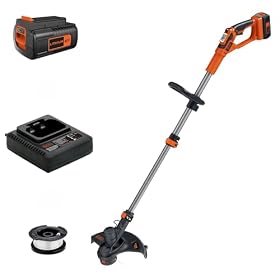
Gas two-stroke trimmers suit long, demanding work when refueling matters more than noise or maintenance. Battery trimmers are easier to start, quieter, and cleaner to store. The better choice depends on yard size, vegetation, runtime needs, and your willingness to maintain an engine.
A gas two-stroke trimmer is usually the better choice for long sessions, heavy weeds, and remote work where refueling is easier than recharging. A battery trimmer is usually better for routine residential trimming because it starts instantly, produces less noise at the operator’s position, and avoids fuel mixing and carburetor maintenance.
Neither power source is automatically stronger in every situation. Compare the trimmer’s rated voltage or engine size, cutting swath, line capacity, shaft design, battery compatibility, and manufacturer’s intended use—not just the power label.
Gas two-stroke versus battery trimmers at a glance
Consideration
Gas two-stroke
Battery-powered
Starting
Pull-start engine; may require several attempts if poorly maintained
Press-button or trigger start on most models
Runtime
Refill with the correct fuel mixture and continue
Limited by battery charge; a spare battery can extend work time
Maintenance
Fuel system, spark plug, air filter, cooling areas, and storage care
Keep contacts, air passages, head, and battery charged and stored correctly
Noise and vibration
Typically louder and more mechanically noticeable
Typically quieter, though the cutting head and motor still make noise
Local emissions
Produces exhaust while running
No tailpipe exhaust during use
Weight and balance
Engine adds weight at the rear or upper end
Battery weight varies by pack size and placement
Best fit
Large properties, dense growth, extended sessions
Routine yard edging, trimming, and noise-sensitive neighborhoods
Choose a gas two-stroke trimmer if you need extended heavy-duty work
Gas is worth considering when you regularly trim thick, tall, or wet vegetation over a large area. Refueling takes less time than waiting for a battery to recharge, and carrying approved fuel can be practical for properties without convenient outlets.
A gas trimmer can also be a better fit for remote land, large lots, and seasonal overgrowth. Look for a design intended for the workload, with a suitable cutting head and enough line capacity for the vegetation you handle. A basic homeowner gas trimmer may not be appropriate for brush or woody stems; use only attachments and cutting tools approved by the manufacturer.
The tradeoffs are significant:
You must use the manufacturer-specified fuel and oil mixture, or premixed fuel if specified.
Old fuel can cause hard starting, poor running, or carburetor problems.
The engine needs routine air-filter, spark-plug, cooling-area, and fuel-system care.
Long-term storage often requires fuel-system preparation according to the manual.
The engine is louder and produces exhaust, so hearing and eye protection remain important.
Never mix fuel based on a guess or a generic ratio. Follow the manual for the exact fuel type, oil specification, and mixture.
Product prices and availability are accurate as of the date/time indicated and are subject to change. Any price and availability information displayed on Amazon.com at the time of purchase will apply to the purchase of this product.
Choose a battery trimmer for easy starts and routine yard work
Battery trimmers are often the more convenient choice for homeowners who trim grass edges, fence lines, planting beds, and ordinary weeds. There is no pull cord, fuel can, carburetor, or engine exhaust. A charged battery lets you begin work immediately, and storage is generally simpler.
Battery models are especially useful when:
You trim in a neighborhood with noise restrictions.
You prefer occasional maintenance rather than engine maintenance.
Your property is small or divided into short work sessions.
You already own batteries from the same tool platform.
You want to avoid storing gasoline or mixing fuel.
Runtime is not a fixed number. It changes with battery capacity, grass density, line diameter, cutting width, throttle use, temperature, and whether the head is loaded with long or damaged line. A larger battery may run longer but add weight and cost. Check the manufacturer’s runtime guidance under conditions similar to your work, and consider a second compatible battery if you cannot finish in one session.
Battery trimmers also have limits. A low charge, overheated battery, restricted air passage, or heavy cutting load can reduce output. Some models are designed mainly for grass and light weeds, while higher-output models are intended for heavier vegetation. The product’s recommended use matters more than voltage alone.
Product prices and availability are accurate as of the date/time indicated and are subject to change. Any price and availability information displayed on Amazon.com at the time of purchase will apply to the purchase of this product.
Power and cutting performance
Gas engines can maintain useful cutting performance during long, demanding sessions, but the result still depends on engine size, gearing, line diameter, head design, and operator technique. A gas engine is not a guarantee that the trimmer can safely cut brush.
Battery performance depends on the motor, battery output, electronic controls, and load. Higher voltage can be part of a higher-output design, but voltage by itself is not a complete measure of cutting power. Compare the manufacturer’s intended vegetation, compatible line sizes, cutting swath, and attachment support.
For either type, thicker line can help with tougher weeds but increases load on the motor or engine and may reduce runtime or performance. Use only the line diameter and head configuration allowed by the manual.
Product prices and availability are accurate as of the date/time indicated and are subject to change. Any price and availability information displayed on Amazon.com at the time of purchase will apply to the purchase of this product.
Runtime, refueling, and charging
For a gas trimmer, practical runtime depends on the fuel tank, engine condition, throttle use, line load, and vegetation. Refueling extends the work session, but the engine should be stopped and allowed to cool as directed before handling fuel.
For a battery trimmer, compare:
Battery platform: A tool sold without a battery may be less attractive if you do not already own compatible packs.
Battery capacity: Higher capacity generally provides more stored energy, but may add weight and charging time.
Charger speed: A faster charger can matter if you have only one battery and a large area to finish.
Replacement cost and availability: Confirm that compatible batteries and chargers are still available through the manufacturer or an authorized source.
Storage requirements: Follow the battery maker’s guidance for temperature, charge level, and long-term storage.
Do not use a battery or charger unless it is approved for that trimmer and platform. Keep lithium-ion batteries away from excessive heat, moisture, and damaged tools.
Noise, vibration, and comfort
Battery trimmers generally eliminate engine noise and vibration, but they are not silent. The motor, gearbox, and spinning line can still produce damaging noise, particularly near hard surfaces that reflect sound. Wear hearing and eye protection with either power source.
Balance may matter more than listed weight. A rear-mounted gas engine can feel different from a battery mounted near the handle or motor. A larger battery can make a cordless trimmer heavier over a long session. If possible, compare the harness, handle position, shaft length, and balance—not only the bare-tool weight.
Maintenance and storage differences
Gas trimmer maintenance
Follow the manual’s service schedule. Typical tasks can include inspecting the air filter, spark plug, fuel lines, cooling passages, fasteners, and cutting head. Use fresh, correctly prepared fuel and follow the storage procedure before long periods of nonuse.
A gas trimmer that has been stored with stale fuel may crank but fail to start, surge, or run poorly. Repeated starting attempts will not solve a fuel-system problem and can create additional wear.
Battery trimmer maintenance
Battery models need less routine service, but they still require care. Remove the battery before clearing the head or performing maintenance. Keep the cutting head free of wrapped grass, inspect the guard and line, clean ventilation areas as directed, and check the battery and contacts for damage.
Do not wash a trimmer, battery, or charger unless the manufacturer specifically permits it. Water intrusion can create an electrical hazard or damage the tool.
Which one costs less to own?
Purchase price alone does not settle the comparison. Include fuel, oil, spark plugs, filters, service, batteries, chargers, and the expected service life of the equipment.
A battery trimmer may have a higher initial cost if it requires a battery and charger, but an existing battery platform can reduce that expense. A gas trimmer may avoid battery replacement costs but requires fuel and engine maintenance. Battery replacement costs also vary by platform and capacity, so check availability before committing to a system.
A practical decision rule
Choose a battery trimmer when you mainly maintain a typical residential yard, value easy starting and lower routine maintenance, and can complete the job with the available battery capacity or a spare pack.
Choose a gas two-stroke trimmer when you routinely work for long periods, clear dense growth across a large or remote property, or need fast refueling more than quiet operation and simple storage.
If your work falls between those cases, prioritize the cutting workload and session length. A higher-output battery model with a second battery may cover ordinary heavy-duty homeowner work. For sustained commercial or large-property use, a properly sized gas trimmer may be more practical—but only if you are prepared to maintain and store a fuel-powered engine.
FAQ
Is a battery trimmer powerful enough for thick weeds?
Many are, but capability varies by motor, battery, line diameter, head, and intended use. Check the manufacturer’s guidance for heavy weeds and use the approved line size. For woody brush, use only an approved brush-cutting attachment and follow the safety instructions.
Do battery trimmers need less maintenance than gas trimmers?
Usually, yes. Battery trimmers avoid fuel mixing, spark plugs, carburetor service, and engine storage procedures. They still need head cleaning, line replacement, inspection, battery care, and safe charger use.
Which lasts longer, a gas or battery string trimmer?
Service life depends on build quality, workload, storage, maintenance, and replacement-part availability. A gas model has more engine components to maintain, while a battery model eventually depends on the condition and availability of its battery pack.
Can I use any battery with a cordless string trimmer?
No. Use only the battery platform and pack types approved by the trimmer manufacturer. An incompatible battery or charger can damage the tool and create a fire or electrical hazard.
Is a two-stroke trimmer better for a large property?
It can be, especially when the work is continuous and refueling is easier than recharging. A battery trimmer may still work well if you have enough compatible batteries and charging capacity for the full job.