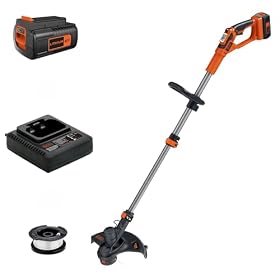
The best trimmer for edging sidewalks gives you controlled line placement, a stable cutting angle, and enough power to cut grass along concrete without scattering debris. Here is what to look for before buying.
Best trimmer for edging sidewalks
The best trimmer for edging sidewalks is one that lets you hold the cutting head at a consistent angle while keeping the line close to the concrete. Look for a model with a dedicated edging mode or rotating shaft, an adjustable handle, a protective guard, and a line-feed system that is easy to control. Battery-powered trimmers are usually the most convenient choice for routine sidewalk edging, while corded and gas models can make sense for specific yard sizes and workloads.
What makes a string trimmer good for sidewalk edging?
Edging is more precise than ordinary grass trimming. You are trying to create a clean boundary without hitting the sidewalk, damaging the line, or throwing stones toward people, vehicles, and windows.
Prioritize these features:
Edging mode or a rotating cutting head: A head that pivots into a vertical position makes it easier to follow the sidewalk edge.
Adjustable shaft or handle: The trimmer should let you maintain a comfortable posture while keeping the head steady.
A guard with a line-cutting blade: The guard helps limit debris and keeps the line from extending too far.
A guide wheel, where available: A wheel can help maintain a uniform distance from the concrete, but it also adds weight and may be less useful on uneven edges.
Controlled line feed: Bump-feed, automatic-feed, and fixed-line systems behave differently. Choose the system that matches how much adjustment you want to make while working.
Adequate visibility: A clear view of the line and sidewalk edge is important for accurate work.
A trimmer with very high power is not automatically better for edging. Excess power can make it easier to strip line against concrete or damage an irregular edge. Control, balance, and the ability to set the head vertically usually matter more.
Battery, corded, or gas power?
Battery-powered trimmers
Battery trimmers are generally the easiest option for edging sidewalks. They start immediately, avoid extension cords, and produce no exhaust while running. They are a practical choice for most residential yards, especially when the battery is compatible with other outdoor tools.
Check the battery system, included battery status, and charger requirements before buying. A tool sold without a battery may cost less initially but require a separate battery and charger. Runtime also depends on line diameter, grass thickness, edging frequency, and how aggressively the head is used.
Corded electric trimmers
Corded models can provide consistent power without battery charging. They may work well for small yards with an accessible outdoor outlet, but the cord requires careful management around the sidewalk, driveway, and cutting head.
Use only an outdoor-rated extension cord and follow the trimmer manufacturer’s instructions for cord size and length. Keep the cord behind you and inspect it for damage before each use. Do not use a corded trimmer in wet conditions unless the manufacturer specifically permits it.
Gas trimmers
Gas trimmers can be useful for large properties, heavy grass, or extended work away from electrical outlets. They are usually heavier and louder than electric models and require fuel, engine maintenance, and safe storage.
For occasional sidewalk edging, gas power is often more capability than necessary. Consider it when the trimmer must also handle dense weeds, long sessions, or brush beyond the capacity of a lighter electric tool.
Product prices and availability are accurate as of the date/time indicated and are subject to change. Any price and availability information displayed on Amazon.com at the time of purchase will apply to the purchase of this product.
Choose the right line and head
Line diameter affects both cutting behavior and compatibility. Thicker line generally lasts longer and handles heavier vegetation, but it can require more power and may not fit every trimmer head. Smaller line can be easier to control for light grass along a sidewalk.
Use only the line size and shape specified by the manufacturer. Round line is commonly used for general trimming and may feed more easily. Shaped or twisted line can offer different cutting characteristics, but it may increase noise or place more load on the head.
A fixed-line head can be convenient for quick replacement and may suit light edging. A bump-feed head lets you release more line by tapping the head, while an automatic-feed head advances line without that manual step. No system is maintenance-free: line can weld together in the spool, jam in the eyelets, or feed unevenly.
Avoid installing metal blades or brush-cutter accessories unless the trimmer is specifically designed and approved for them. A standard string trimmer head is not automatically safe for blade conversion.
Product prices and availability are accurate as of the date/time indicated and are subject to change. Any price and availability information displayed on Amazon.com at the time of purchase will apply to the purchase of this product.
Features that affect comfort and accuracy
Weight and balance
A lighter trimmer is easier to hold vertically for repeated edging. Balance matters as much as listed weight: a tool that is nose-heavy can make it difficult to keep the head at a steady height.
Adjustable auxiliary handle
An adjustable front handle helps accommodate different users and working angles. Set it so your elbows remain slightly bent and you do not need to twist your wrist to keep the head vertical.
Shaft design
A straight shaft may provide more reach and can be useful around larger properties. A curved shaft may feel lighter and more maneuverable for simple trimming. Neither design is universally best for sidewalk edging; the ability to rotate or angle the head is more important.
Guide wheel
A wheel can help produce a consistent edge on a smooth, level sidewalk. It may catch on cracks, raised concrete, or uneven ground, however. If your sidewalks are irregular, a well-balanced head without a wheel may give you better control.
Guard and debris control
Use the supplied guard and make sure it is installed correctly. The guard should not be removed to gain a wider cutting path. Edging throws debris differently from horizontal trimming, so wear eye protection, long pants, closed-toe shoes, and hearing protection when appropriate. Keep people and pets away from the work area.
How to edge a sidewalk cleanly
Inspect the edge first. Remove loose stones, sticks, wire, and other objects from the cutting path.
Set the trimmer to edging mode. Rotate the head or shaft according to the instructions rather than forcing it into position.
Start with the line just above the concrete. Do not drag the head against the sidewalk.
Walk at a steady pace. Let the line cut the grass instead of pushing quickly through thick growth.
Keep the guard between you and the cutting area. Direct debris away from people, vehicles, and windows.
Make a second light pass if needed. A shallow first pass is safer than trying to remove a large amount of overgrown grass at once.
Stop and inspect the line frequently. Concrete wears line quickly, so replace or advance it when the cutting width becomes noticeably smaller.
For a severely overgrown edge, use a manual edger or make several light passes rather than forcing a residential string trimmer through dense soil and roots.
Common problems while edging
The line breaks as soon as it touches the sidewalk
Concrete and asphalt wear trimmer line quickly. Check that the head is not being pressed against the surface and confirm that the line diameter and type match the manual. If the line is old, brittle, or exposed to heat, replace it.
The head will not rotate into edging position
Turn the tool off, remove the battery or disconnect the plug, and inspect the adjustment mechanism for grass or debris. Do not force a locked head. If the mechanism still will not move, consult the manual or replace the affected assembly rather than operating the tool in an unstable position.
The trimmer leaves an uneven edge
Check your walking speed, head angle, and line length. A guide wheel may help on smooth sidewalks, while uneven concrete may require slower hand-guided work. Adjust the auxiliary handle so you can keep the head vertical without bending your wrist.
The trimmer loses power during edging
Inspect the spool for tangled or fused line, clear grass from the head, and check that the battery is charged and seated correctly. On corded tools, inspect the extension-cord connection and use the cord specification required by the manufacturer. Persistent power loss, burning smells, unusual arcing, or a hot motor requires stopping the tool and seeking qualified service.
When to replace the trimmer
A replacement may be reasonable when the head no longer locks securely in edging mode, the shaft or guard is cracked, the battery no longer provides useful runtime, or compatible replacement parts are unavailable. Replace only the damaged component when the repair is clearly supported by the manufacturer and costs less than a suitable replacement tool.
If the trimmer runs normally but edging remains difficult, the issue is more likely poor head positioning, an unsuitable line, excessive overgrowth, or an awkwardly balanced design. In that case, a trimmer with a dedicated edging mode, better handle adjustment, or improved balance may be a more useful upgrade than a higher-powered motor.
Bottom line
For most homeowners, the best trimmer for edging sidewalks is a balanced battery-powered model with a rotating head or edging mode, adjustable handle, effective guard, and readily available replacement line. Choose a corded model when the work area is small and an outlet is convenient. Choose gas power only when the same tool must also handle large areas or heavy vegetation. Prioritize control and compatibility over maximum power, and always follow the manufacturer’s instructions for line, attachments, charging, and safe operation.
FAQ
Can any string trimmer edge a sidewalk?
Not all string trimmers are equally suited to edging. A model with a rotating head, dedicated edging mode, or vertical-shaft adjustment is easier to control and more likely to produce a clean edge.
Is a battery trimmer good for sidewalk edging?
Yes. Battery trimmers are convenient for most residential edging because they start quickly and do not require an extension cord. Confirm that the battery and charger are included or compatible with the tool.
Should trimmer line touch concrete?
Avoid deliberately dragging the line against concrete. Occasional contact is normal, but continuous contact wears the line quickly and can make edging uneven.
What line size should I use for edging?
Use the line diameter and shape specified for your trimmer. Thicker line may last longer but can require more power, while lighter line can be easier to control for ordinary grass edging.
Why does my trimmer keep stopping while edging?
Check for tangled or fused line, grass packed around the head, a low or poorly seated battery, or an undersized extension cord. Stop using the tool if it smells burnt, becomes unusually hot, or shows electrical damage.