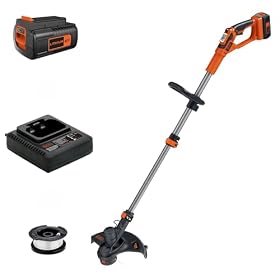
The best trimmer for edging a long driveway needs enough runtime and line capacity to cover a large area without frequent stops. Learn which features matter most and how to choose between battery, gas, and corded models.
A long driveway is easiest to edge with a string trimmer that combines dependable runtime, comfortable handling, and a head that can maintain a clean vertical cut. For most homeowners, a battery-powered model is the simplest choice if its battery capacity covers the driveway and nearby lawn in one session. Gas models make more sense for very large properties or extended commercial-style work, while corded trimmers are limited by outlet access and cable management.
What matters most for edging a long driveway
Runtime and power source
Edging can consume more time than trimming around a small yard, especially when the driveway has long straight sections, uneven pavement, or overgrown grass. Battery runtime should be considered in terms of the complete job, not just the driveway length. You may also need to trim around curbs, walkways, fences, and landscaping during the same session.
A battery trimmer is usually the most convenient option because it starts quickly, produces no fuel exhaust, and requires less routine maintenance than a gas model. Look for a system with a removable battery so you can keep a charged spare available if needed. Check whether the listed runtime applies to light trimming, and remember that thick grass, high power settings, and heavy line can reduce actual runtime.
A gas trimmer can be a better fit when the edging area is extensive or when continuous operation is more important than low maintenance. It can be refueled during the job, but it is louder, produces exhaust, and requires fuel preparation and engine maintenance.
A corded electric trimmer can handle driveway edging effectively when an outdoor outlet is close enough. However, the cord can snag on plants, vehicles, and driveway obstacles. Never use an outdoor power tool with a damaged cord, and follow the manufacturer’s requirements for outdoor-rated extension cords and ground-fault protection.
Adjustable edging control
A trimmer with a rotating head or a dedicated edging mode can make it easier to keep the line vertical beside pavement. A guide wheel can also help maintain a consistent distance from the driveway, although it may add weight and can be awkward on irregular edges.
If the model does not have a dedicated edging function, you can often rotate the shaft or head manually, but the process may be less consistent. For a long driveway, controls that make it easy to change between horizontal trimming and vertical edging are worth prioritizing.
Shaft design and handle adjustment
A straight shaft is often useful for reaching beneath shrubs and along distant edges, while a curved shaft may feel lighter for basic lawn trimming. Neither design automatically produces a better edge. The more important factors are balance, handle adjustment, and whether the head can be positioned comfortably for vertical work.
Choose a model with an adjustable auxiliary handle and, if available, an adjustable shaft. These features help reduce wrist strain when the trimmer is held at an angle for a long stretch. A shoulder strap can also help with heavier gas or high-capacity battery models.
Cutting width
A wider cutting swath can reduce the number of passes needed along a long driveway. It may also use line faster and require more power, especially in dense or wet growth. A narrower swath provides more control around narrow pavement edges, raised borders, and landscaping.
For a driveway with mostly straight, open edges, a wider cutting width is generally efficient. If the border is irregular or close to garden beds, control may matter more than maximum width.
Line diameter and head capacity
Thicker trimmer line generally handles dense grass and light weeds better, but it can require more motor power and may reduce runtime on a battery model. Smaller line is often adequate for ordinary lawn grass and can be easier to feed.
A bump-feed head lets you advance line by tapping the head against the ground. An automatic-feed head reduces manual adjustment but can release more line than needed if its controls are not set correctly. A fixed-line head can be convenient for certain heavy-duty applications, but it may require pre-cut pieces of line.
For a long driveway, head capacity matters because a larger spool can reduce interruptions. Make sure the replacement line diameter and loading method match the trimmer manufacturer’s specifications.
Battery, gas, or corded: which is best?
Choose battery for most residential driveways
A battery trimmer is usually the best starting point for a typical residential driveway when you want low noise, easy starting, and minimal maintenance. Select one with:
- A battery platform you already own, if compatible
- A removable battery and accessible charging system
- Enough stated runtime for the driveway plus other trimming
- A comfortable handle and manageable total weight
- A head or shaft that supports vertical edging
If the driveway is long enough that one battery may not cover the job, budget for an additional compatible battery rather than assuming the included battery will be sufficient.
Choose gas for long, demanding sessions
Gas is worth considering for large properties, thick weeds, and repeated work where refueling is more practical than waiting for batteries to charge. Before buying, consider storage, fuel handling, starting procedure, vibration, noise, and maintenance. Follow the manufacturer’s instructions for fuel type, mixing, storage, and engine operation.
Choose corded electric only when access is easy
A corded model can be effective and lightweight, but it is best suited to driveways near a suitable outdoor outlet. Measure the route and account for corners, parked vehicles, landscaping, and the need to keep the cable away from the cutting head. If the cord must be stretched across an area where people or vehicles pass, another power source may be safer and more practical.
Features that make long-driveway edging easier
Prioritize these features when comparing models:
- A rotating shaft or edging mode: Helps create a vertical cut beside pavement.
- Adjustable handles: Improve control and reduce awkward wrist angles.
- A guide wheel or edge guard: Helps maintain a consistent line where the driveway edge is even.
- A bump-feed or easy-load head: Reduces interruptions when line runs short.
- A battery gauge or clear fuel access: Makes it easier to plan the job.
- A shoulder strap: Useful when the trimmer is heavy or the edging session is long.
- A debris guard: Helps direct stones and clippings away from the operator.
No feature replaces proper technique. Keep the head level for normal trimming, rotate it only as directed for edging, and avoid forcing the line against concrete or asphalt. Pavement can wear line quickly and may throw small stones.
How to edge a long driveway efficiently
Start with a clear path. Move vehicles, hoses, toys, and loose stones away from the edge. Wear eye protection, long pants, sturdy footwear, and any additional protective equipment specified by the manufacturer.
Work in manageable sections and keep the head at a consistent height. For a straight driveway, use the pavement edge as a visual guide and walk at a steady pace. Do not lean the head deeply onto the pavement; a small gap can preserve line and reduce debris.
If grass has grown over the pavement, make a light first pass rather than trying to remove all of it at once. Very dense growth may require a second pass or a different tool. For woody weeds or thick brush, use only an attachment and cutting accessory approved for the trimmer. Do not install a metal blade unless the trimmer is specifically designed and equipped for that use.
A string trimmer is suitable for grass and soft weeds along most driveway edges. It may not be the right tool for:
- Thick woody stems
- Large areas of brush
- Deeply overgrown edges with embedded stones
- Hard soil or roots that need excavation
- A driveway edge that needs structural repair
A brush cutter, manual edging tool, or dedicated lawn edger may provide better results in these situations. Use only manufacturer-approved attachments and guards, and never modify a trimmer to accept an accessory it was not designed to use.
Bottom line
For most homeowners, the best trimmer for edging a long driveway is a battery model with sufficient runtime, an adjustable handle, a rotating head or edging mode, and a line head that is easy to reload. Choose gas when the property demands long continuous operation, or corded electric when an outlet is conveniently available and cable control is not a problem. The right balance of runtime, control, line capacity, and comfort matters more than choosing the highest advertised power figure.