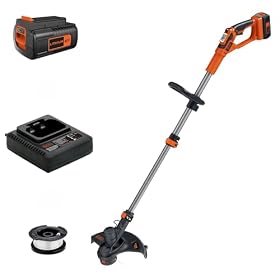
The best lightweight string trimmer is easy to carry and control without being too weak for your grass. Here is how to compare battery, corded, and gas models for your yard.
What do you need help with?
Open an answer, or tell us what we should cover next.
Answered in this guide
Compare 18V and 40V cordless string trimmers
18V trimmers are usually lighter and may be easier to control, while 40V models can offer more power and longer runtime at the cost of added battery weight. Compare the complete tool-and-battery weight, voltage, runtime, and charger details.
Understand what makes a string trimmer lightweight
Check whether the listed weight includes the battery, because battery size can add noticeable weight. Compare complete ready-to-use weights, balance, and how easily you can carry and control each model.
A wider cutting swath trims more area per pass and can shorten the job, but it may use more battery power and feel harder to control. A narrower width can suit smaller yards or users who prioritize maneuverability.
Thin line can make a lightweight trimmer feel more responsive and may reduce motor load. Thicker line handles tougher weeds but needs more power, while automatic-feed and bump-feed heads offer different ways to manage line.
Requests help us prioritize the next guide. No email required.
One anonymous request per topic.
Best lightweight string trimmer
The best lightweight string trimmer should be easy to carry, start, and control while still having enough power for the grass and weeds you need to cut. For most homeowners, a battery-powered trimmer offers the best balance of low weight, convenience, and maneuverability. A corded model can be even lighter for small yards, while a gas trimmer may be the better choice when thick weeds and long runtime matter more than weight.
Quick buying advice
Choose a battery string trimmer if you want easy starting, quiet operation, and freedom from an extension cord. Look for a model with a battery and charger included if you do not already own compatible batteries.
Choose a corded electric trimmer for a small yard close to an outdoor outlet. These are often light and inexpensive, but the cord limits movement and requires careful handling.
Choose a gas trimmer only if you regularly cut dense, tall, or woody growth. Gas models can provide strong sustained power, but they are usually heavier, louder, and more demanding to maintain.
What makes a string trimmer lightweight?
Manufacturers may list tool weight with or without the battery, so compare specifications carefully. A battery can add noticeable weight, especially on higher-voltage systems. Check whether the listed weight includes:
The battery
The cutting head and line
The shoulder strap, if supplied
Fuel, for gas models
Weight distribution matters as much as the number on the specification sheet. A trimmer that balances near the cutting head can feel front-heavy, while one with a rear-mounted motor may feel more balanced but can still be tiring if the handle position is poor.
An adjustable auxiliary handle, shaft, and cutting angle can make a lightweight trimmer easier to control. A well-positioned handle helps keep the cutting head level without forcing your wrist into an uncomfortable angle.
Product prices and availability are accurate as of the date/time indicated and are subject to change. Any price and availability information displayed on Amazon.com at the time of purchase will apply to the purchase of this product.
Battery models are usually the easiest choice
Battery-powered trimmers are often the most practical option for routine residential work. They start with a trigger or switch, produce no exhaust during use, and generally need less maintenance than gas equipment.
Voltage and runtime
Higher battery voltage does not automatically mean a better trimmer. It can support more power, but the battery and motor may also add weight. Match the battery system to the work:
Small edging and light grass: prioritize low weight and comfortable handling.
Average suburban yards: choose a balance of runtime, power, and battery weight.
Overgrown areas: accept some extra weight for a larger battery or stronger motor.
Runtime depends on grass height, line diameter, cutting width, operating speed, and whether the trimmer is used continuously or intermittently. A spare compatible battery may be more useful than choosing a heavier trimmer with a very large battery.
Battery and charger details
If you do not already own batteries from a compatible tool system, verify that the package includes both the battery and charger. Tool-only packages can appear lighter or less expensive but require additional purchases.
Also check whether the battery is proprietary or part of a broader tool platform. A shared battery system can make the trimmer more useful if you plan to buy other compatible outdoor or power tools.
Product prices and availability are accurate as of the date/time indicated and are subject to change. Any price and availability information displayed on Amazon.com at the time of purchase will apply to the purchase of this product.
Cutting width affects control and runtime
A wider cutting swath covers more ground with each pass, which can shorten trimming time. However, it can also use more battery power and make the head harder to control in tight spaces.
A narrower cutting width is often preferable around flower beds, fences, posts, and other obstacles. For a lightweight trimmer, a moderate cutting width can provide a useful compromise between productivity and maneuverability.
Do not assume the advertised cutting width is the only factor that determines performance. Motor power, line diameter, head design, and the condition of the line also affect how efficiently the trimmer cuts.
Product prices and availability are accurate as of the date/time indicated and are subject to change. Any price and availability information displayed on Amazon.com at the time of purchase will apply to the purchase of this product.
Line size and head design
Thin line generally reduces load on the motor and can help a small trimmer feel responsive. Thicker line can handle tougher weeds but may require more power and can reduce runtime on a battery model.
Use only the line diameter recommended by the manufacturer. Oversized line can strain the motor, overload the head, reduce performance, or cause the line to feed poorly.
Automatic-feed and bump-feed heads
An automatic-feed head releases line according to the trimmer's feed system. It can be convenient, but replacement spools may cost more and the mechanism can be difficult to troubleshoot if it jams.
A bump-feed head releases line when you tap the head against the ground. It can be more flexible for users who want to control line use, but bumping too aggressively can damage the head.
Some trimmers use a fixed-line or pre-cut-line head. These can be simple to reload and useful for rougher vegetation, but they require keeping replacement pieces available.
Straight shaft or curved shaft?
A curved shaft can feel compact and easy to handle for light trimming. It may suit users who mainly maintain lawn edges and small areas around landscaping.
A straight shaft often provides better reach beneath shrubs, decks, and other obstacles. It can also be more suitable for attachments on models designed for that purpose. The tradeoff is that the longer shaft may feel less nimble or slightly heavier at the cutting end.
Choose the shaft style based on where you trim, not only on the advertised tool weight.
Features worth prioritizing
For a lightweight string trimmer, prioritize features that reduce fatigue and simplify control:
Adjustable auxiliary handle
Variable-speed trigger or control
Tool-free shaft adjustment
A guard that protects without obstructing visibility
Easy line loading
A visible battery charge indicator
A rotating head or edging guide, if you regularly edge lawns
A shoulder strap for longer sessions
A two-speed setting can be useful when you need maximum runtime for grass but extra power for thicker weeds. Variable speed is also helpful near delicate plants and hard surfaces.
What to check before buying
Before choosing a model, answer these questions:
How large is the area? A small yard may not justify a large battery or gas engine.
What are you cutting? Soft grass requires less power than dense weeds or woody stems.
Do you already own compatible batteries? A tool-only trimmer may make sense within an existing system.
Will you edge regularly? Look for a rotating head or edging support if that feature matters to you.
Can you comfortably reach the controls? Handle adjustment and balance are important for users with smaller frames or limited grip strength.
How will you store it? A split shaft or compact design can help in a crowded shed or garage.
When a lightweight trimmer is not the right choice
A very light trimmer may struggle with tall, wet, dense, or woody growth. If you routinely clear neglected areas, thick brush, or saplings, consider a more powerful trimmer or a brush cutter designed for heavier vegetation.
Do not install a brush cutter blade on a trimmer unless the manufacturer specifically approves that attachment and provides the required guard and hardware. Blade use involves additional hazards and may require different operating practices and protective equipment.
For large properties, frequent heavy clearing, or professional use, durability and sustained power may matter more than minimizing weight.
Safe use and maintenance
Wear eye protection, sturdy shoes, long pants, and hearing protection when appropriate. Keep people and pets away from the cutting area, and inspect the ground for stones, wire, and other debris before starting.
Remove the battery, unplug the tool, or shut off and cool a gas trimmer before clearing a jam or servicing the head. Follow the manufacturer’s instructions for line replacement, guards, battery charging, fuel, and storage.
Keep the guard installed. Do not bypass the trigger, safety switch, or other protective feature. If the trimmer vibrates unusually, makes a grinding sound, smells of overheated electrical components, or continues running improperly, stop using it and inspect it according to the manual. Electrical repairs and damaged wiring should be handled by a qualified professional or an authorized service center.
Bottom line
For most homeowners seeking a lightweight string trimmer, start with a compact battery model that has a comfortable handle, a manageable cutting width, and a line size suited to ordinary grass. Choose a corded model when the yard is small and an outlet is convenient. Move to gas power or a heavier brush-capable tool only when your cutting conditions demand it.
FAQ
What is the lightest type of string trimmer?
Corded electric trimmers are often the lightest because they do not carry a battery or fuel tank. Compact battery trimmers can also be easy to handle and are more convenient when you need unrestricted movement.
Are lightweight battery string trimmers powerful enough?
Many are suitable for lawn edges, grass, and ordinary weeds. They may be less effective on tall, wet, dense, or woody growth, where a more powerful trimmer or brush cutter is more appropriate.
Is a straight shaft better than a curved shaft?
Neither is universally better. A curved shaft can feel compact and maneuverable, while a straight shaft usually offers more reach under shrubs and may support approved attachments on compatible designs.
Does a larger cutting width make a trimmer better?
A larger cutting width can cover more ground quickly, but it may use more power and be harder to control around landscaping. A moderate or narrower width can be a better choice for detailed residential trimming.
Can I use thicker line to get more cutting power?
Only if the manufacturer specifies that line size. Thicker line can handle tougher vegetation, but using an oversized line can overload the motor or cause feeding problems.