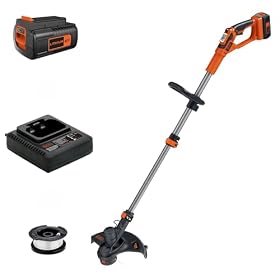
The best string trimmer for a home lawn is usually a cordless battery model for convenience, but corded electric and gas trimmers can make more sense for small yards or heavy growth. Use this guide to match the trimmer to your lawn and trimming habits.
A cordless battery string trimmer is the best fit for many home lawns because it starts easily, avoids fuel mixing, and is easier to maneuver than a gas model. For a very small yard, a corded trimmer can cost less and provide consistent power. Gas models remain useful for large properties, thick weeds, and long periods of heavy cutting.
The right choice depends less on maximum power than on your lawn’s size, the type of vegetation you cut, available storage, and whether you already own batteries from a compatible tool platform.
Quick recommendations by yard and task
Small lawn with light grass: A lightweight corded or battery trimmer is usually sufficient.
Typical suburban lawn: Choose a cordless battery model with an adjustable shaft, a bump-feed head, and enough battery capacity to finish the yard.
Large yard or overgrown edges: Look for a higher-capacity battery system or a gas trimmer designed for longer sessions.
Thick weeds and brush: Choose a model that supports a larger manufacturer-approved line size. For woody brush, use a compatible brush-cutter attachment or blade only if the trimmer is specifically designed for it.
Frequent edging: A rotating shaft or clearly marked edging position can make switching between trimming and edging easier.
Users who dislike maintenance: Battery and corded models generally require less routine maintenance than gas trimmers.
Battery, corded, or gas?
Cordless battery trimmers
Battery models are convenient for most residential work. They start with a switch or trigger, produce no exhaust at the point of use, and do not require fuel storage. They are also easier to carry around gardens, fences, and landscaping beds.
When comparing them, check:
Whether the battery and charger are included
The battery voltage or platform, without treating voltage alone as a complete power rating
The manufacturer’s stated runtime conditions
Battery charging time
Whether replacement batteries are readily available
Compatibility with other tools you already own
Runtime varies with line diameter, grass density, cutting width, throttle use, temperature, and battery condition. A second battery may be more useful than choosing a heavier trimmer with a larger motor.
Corded electric trimmers
A corded trimmer can be a practical choice for a small yard close to an outdoor outlet. It provides continuous operation and usually avoids battery replacement costs. The main drawbacks are managing the extension cord and staying within the cord’s safe operating requirements.
Use an outdoor-rated extension cord of the type and gauge specified by the trimmer manufacturer. Keep the cord behind you and away from the cutting path. A ground-fault circuit interrupter, or GFCI, is generally important when using corded outdoor equipment; follow local electrical guidance and the manufacturer’s instructions.
Gas trimmers
Gas trimmers can be appropriate for large properties, dense weeds, or extended cutting sessions. They typically require more maintenance, including fuel handling, air-filter care, spark-plug service, and seasonal storage. They are also louder and produce exhaust.
If you choose gas, verify the required fuel type and any oil-mixing instructions before filling the tank. Never refuel a hot engine, and store fuel only as directed in an approved container.
Product prices and availability are accurate as of the date/time indicated and are subject to change. Any price and availability information displayed on Amazon.com at the time of purchase will apply to the purchase of this product.
Specifications that matter
Cutting swath
Cutting swath is the width cleared in one pass. A wider swath can reduce the number of passes across open areas, while a narrower head may be easier to control around trees, flower beds, posts, and other obstacles.
Do not choose the widest available head automatically. A wider cutting path can use line faster and may demand more power in dense grass. Match the swath to the density of the vegetation and the amount of precision needed.
Line diameter
Thicker line generally handles tougher weeds and lasts longer against hard surfaces, but it may require more motor power and can reduce runtime on a battery model. Thin line is often suitable for ordinary grass and light trimming.
Use only the line diameter and line type approved for the trimmer. Installing oversized line can overload the motor or prevent the head from feeding correctly.
Feed system
The main head types are:
Bump feed: Tap the head on the ground to release more line. It is simple and allows manual control, but repeated bumping can be awkward.
Automatic feed: The trimmer releases line automatically under certain conditions. This reduces manual feeding but can use line quickly if the system overfeeds.
Fixed-line head: Uses pre-cut pieces of line. It can be quick to reload and useful for tougher vegetation, but it requires keeping replacement pieces available.
For routine home-lawn work, a bump-feed head is often a reasonable balance between control and convenience. If easy reloading is a priority, look for a head designed for tool-free or simplified spool replacement.
Shaft and handle design
A straight shaft can offer useful reach around shrubs and under some obstacles. A curved shaft may feel lighter and more natural for basic lawn edging. Neither design is automatically better; fit and balance matter more.
Useful features include:
Adjustable shaft length
Adjustable auxiliary handle
A shoulder strap or harness for heavier models
A head that can rotate for edging
A guard that protects the operator from flying debris
A lockout or trigger arrangement that reduces accidental starts
If possible, choose a trimmer that lets you adjust the handle and shaft so the head stays level without forcing your wrists or shoulders into an awkward position.
Product prices and availability are accurate as of the date/time indicated and are subject to change. Any price and availability information displayed on Amazon.com at the time of purchase will apply to the purchase of this product.
What is the best setup for most homeowners?
For a typical home lawn, look for a cordless trimmer with:
A battery and charger included, unless you already own compatible batteries
A moderate cutting swath suited to the size of the yard
A bump-feed or easy-load head
A line diameter approved for both grass and the weeds you normally encounter
Adjustable handle and shaft positions
A guard that is securely attached
A battery platform with replacement batteries and parts available
If the lawn is small and an outlet is nearby, a corded model may be the more economical choice. If the property includes long fence lines, fields, thick brush, or neglected areas, consider a heavier-duty model rather than expecting a lightweight homeowner trimmer to perform brush-clearing work.
Product prices and availability are accurate as of the date/time indicated and are subject to change. Any price and availability information displayed on Amazon.com at the time of purchase will apply to the purchase of this product.
Common mistakes to avoid
Buying by voltage alone
Battery voltage does not fully describe cutting performance or runtime. Motor design, line size, cutting swath, battery capacity, and control system also affect results.
Choosing a line that is too thick
Oversized line can cause poor feeding, overheating, and reduced runtime. Follow the manual’s line-size limits.
Ignoring replacement parts
Before buying, check whether spools, line, guards, heads, batteries, and chargers are available. A common platform with accessible replacement parts can be more useful than a cheaper trimmer that is difficult to maintain.
Using a trimmer for brush it was not designed to cut
String trimmers are intended for grass and suitable weeds. Do not install a metal blade or brush-cutter attachment unless the specific trimmer supports it and the complete approved accessory setup is used. Wear the required protective equipment and follow the manual.
Product prices and availability are accurate as of the date/time indicated and are subject to change. Any price and availability information displayed on Amazon.com at the time of purchase will apply to the purchase of this product.
Safe operation and maintenance
Wear eye protection, long pants, closed-toe shoes, and hearing protection when recommended. Keep children and bystanders away from the cutting area. Inspect the guard, head, line, battery, cord, or fuel system before starting.
Stop the trimmer and disconnect the battery, unplug the cord, or shut off the engine before clearing wrapped grass or servicing the head. Do not defeat safety switches or operate with a damaged guard.
For longer life:
Clean grass from the head and air openings after use.
Store batteries according to the battery manufacturer’s instructions.
Keep corded models and extension cords away from moisture when not rated for it.
Use fresh, correctly prepared fuel in gas models.
Replace worn line and damaged spools rather than forcing a poorly feeding head to operate.
When to choose a replacement head or line instead
If the motor runs normally but the trimmer will not feed line, the head or spool may be worn, clogged, incorrectly wound, or incompatible. Replacing the correct spool, head, or line is often more sensible than replacing the entire trimmer.
A replacement unit becomes more reasonable when the motor repeatedly overheats, the shaft or guard is damaged, the battery system is discontinued, or repair costs approach the cost of a suitable new trimmer. For electrical faults, damaged wiring, burning smells, or a battery that becomes unusually hot, stop using the tool and follow the manufacturer’s service guidance rather than attempting an improvised repair.
FAQ
What type of string trimmer is best for a typical home lawn?
A cordless battery trimmer is the best general-purpose choice for many homeowners because it is easy to start and maneuver. A corded model can be practical for a small yard near an outlet, while a gas model is better suited to large properties or heavy, prolonged cutting.
Is a thicker trimmer line better?
Thicker line can handle tougher weeds, but it also requires more power and may reduce battery runtime. Use only the diameter and line type approved by the trimmer manufacturer.
How much battery runtime do I need?
Choose enough capacity to finish your normal trimming session without exhausting the battery. Runtime depends on vegetation, line size, cutting width, throttle use, and temperature, so manufacturer runtime estimates may not match every yard.
Can I use a brush cutter blade on a string trimmer?
Only if the exact trimmer is designed and approved for that accessory, with the required guard and hardware. Do not modify a standard string trimmer to accept a blade; follow the manufacturer’s instructions and safety requirements.