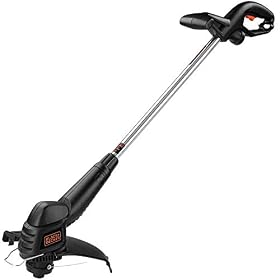
For an HOA that prohibits gas tools, a cordless battery string trimmer is usually the most practical choice. Learn which features matter, when corded models make sense, and how to avoid noise, runtime, and maintenance problems.
If your HOA bans gas-powered lawn equipment, choose an electric string trimmer—usually a cordless battery model. It avoids gasoline and exhaust, starts with a trigger, and is generally easier to keep within neighborhood noise rules. A corded trimmer can work for a small yard with an outdoor-rated extension cord, but battery power is more convenient for larger or disconnected areas.
What to look for in an HOA-friendly trimmer
Battery power for most yards
A battery trimmer is the best general fit when you need to edge sidewalks, trim around trees, or reach the far side of a property. There is no fuel to store, no engine warm-up, and no pull-starting. Noise is typically lower than with gas equipment, although a battery trimmer is not silent.
Check whether the tool is sold as a bare tool or as a kit. A bare tool requires a compatible battery and charger, which may make sense if you already own equipment on that battery platform. A kit includes the essentials but can cost more upfront.
Corded power for small, accessible areas
A corded electric trimmer can be a sensible low-cost option for a small lot with an exterior outlet. It provides continuous power and avoids battery charging or runtime limits. Its disadvantages are the extension cord, reduced mobility, and the need to keep the cord away from the cutting head.
Use only an outdoor-rated extension cord that matches the manufacturer's requirements. Protect connections from moisture, use a ground-fault circuit interrupter (GFCI)-protected outlet, and stop using the tool if the cord or plug is damaged.
Noise and operating hours
An electric trimmer may satisfy an HOA's ban on gas tools without automatically satisfying its quiet-hours rules. Read the HOA's equipment, noise, and operating-hour policies before buying. Use the lowest effective power setting, avoid early-morning or late-evening work, and keep the trimmer head away from hard surfaces when possible.
Adjustable power and controls
Variable-speed control helps you use less power for light grass and more power for dense growth. This can reduce noise and extend battery runtime. A lockout or safety switch is also useful, especially when the trimmer is stored where children could reach it.
Weight and balance
Battery size, shaft design, and guard construction affect how tiring the trimmer feels. A lighter tool is easier for occasional touch-ups, while a heavier, higher-power model may be preferable for thick weeds. If possible, prioritize a well-balanced shaft and an adjustable handle over maximum advertised power.
Battery specifications that affect the decision
Voltage is not runtime
A higher voltage can support a stronger motor, but it does not by itself tell you how long the trimmer will run. Runtime depends on battery capacity, cutting load, line diameter, grass density, and the power setting.
Battery capacity is commonly expressed in amp-hours (Ah). Within the same battery platform, a higher-Ah battery generally stores more energy and may run longer, but it also adds weight and charging time. Follow the trimmer manufacturer's compatibility guidance rather than assuming every battery from a brand will fit.
Runtime claims are conditional
Manufacturers may list runtime under specific conditions, such as light trimming or intermittent operation. Dense weeds, continuous full-power use, a large cutting swath, and an overgrown yard can reduce practical runtime. For a small yard, one compatible battery may be enough. For a larger property, a second battery or a rapid charger may be more useful than choosing a heavier trimmer.
Charging and storage
Charge batteries with the supplied or approved charger, keep contacts clean and dry, and store the battery according to the manufacturer's temperature guidance. Do not use a swollen, cracked, overheated, or damaged battery. Replace it through the manufacturer's recommended channel.
Replacement batteries for compatible electric trimmers
Product prices and availability are accurate as of the date/time indicated and are subject to change. Any price and availability information displayed on Amazon.com at the time of purchase will apply to the purchase of this product.
Line and cutting-head choices
The cutting line is a consumable, and the correct size matters. Thin line is often easier on a smaller electric motor and works well for grass edging. Thicker line can handle tougher weeds but may use more power and place more load on the motor.
Do not install line that exceeds the diameter range listed for the trimmer. Oversized line can reduce speed, shorten runtime, cause overheating, or interfere with automatic line-feed mechanisms.
A bump-feed head lets you release more line by tapping the head against the ground. Automatic-feed systems advance line without tapping but can use line more quickly. Fixed-line heads may be convenient for certain heavy-duty applications, but they require the correct replacement pieces.
Product prices and availability are accurate as of the date/time indicated and are subject to change. Any price and availability information displayed on Amazon.com at the time of purchase will apply to the purchase of this product.
The easiest setup and movement around the property
No extension cord across walkways or landscaping
A good match for medium-size yards and routine maintenance
Compatibility with batteries you already own
Choose a corded trimmer if you have:
A small yard close to a suitable outdoor outlet
No need to carry a battery or wait for charging
A preference for continuous runtime
A willingness to manage an extension cord carefully
A battery model is usually the safer recommendation when convenience and access matter. A corded model can be the better value when the yard is small and the outlet location makes cord management straightforward.
Product prices and availability are accurate as of the date/time indicated and are subject to change. Any price and availability information displayed on Amazon.com at the time of purchase will apply to the purchase of this product.
Features worth prioritizing
Look for these features in roughly this order:
An approved power source: battery platform or corded design that fits your yard.
A compatible cutting-head system: replacement spools or line should be easy to find.
Adjustable shaft or handle: useful for comfortable posture and different users.
A properly sized guard: helps control flying debris and line exposure.
Variable-speed control: useful for quieter, lighter trimming.
A replacement battery path: important if the included battery eventually loses capacity.
A warranty and available parts: especially for the head, spool, guard, charger, and battery.
Avoid choosing solely by cutting width or battery voltage. A wider cutting swath may finish faster, but it can also draw more power and put additional load on the motor. Match the tool to the grass and weeds you actually maintain.
How to keep an electric trimmer HOA-friendly
Confirm that the HOA prohibits gas tools rather than all powered tools.
Check any separate limits on decibel levels or operating hours.
Trim when grass and foliage are dry if the manufacturer's instructions permit it.
Keep the guard installed and use eye protection, long pants, and closed-toe shoes.
Clear stones, wire, and other objects before starting.
Keep people and pets away from the cutting area.
Stop the tool before clearing wrapped grass or replacing line.
Remove the battery or unplug the tool before maintenance.
Electric does not mean risk-free. The head can throw debris, and the battery or cord requires proper handling.
When to choose a brush cutter instead
A standard string trimmer is intended for grass and light weeds. If the property has thick woody stems, dense brush, or repeated clearing work, look for a compatible brush-cutter attachment or a purpose-built electric brush cutter—only if the manufacturer approves that accessory for the tool.
Do not install a metal blade or other cutting attachment unless the trimmer is specifically designed and approved for it. The guard, handle, harness, and operating procedure may be different from those used with nylon line.
Bottom line
For most HOA-restricted properties, buy a cordless battery string trimmer with a compatible replacement-battery system, adjustable controls, and readily available line or spools. Choose a corded model when the yard is small and an outdoor outlet is conveniently located. Before purchase, verify the HOA's noise and operating-hour rules, then match battery capacity, line size, and cutting width to the size and density of your yard.
FAQ
Are battery string trimmers allowed by HOAs that ban gas tools?
Usually, a battery trimmer meets a rule that specifically bans gasoline-powered equipment, but every HOA can write its own restrictions. Check the association's rules for electric equipment, noise limits, and operating hours before buying.
Is a battery trimmer quieter than a gas trimmer?
Generally, yes, because it does not have a gasoline engine running at high speed. However, the cutting head and motor still make noise, so operate it only during the hours allowed by your HOA.
How much battery runtime do I need for a typical yard?
That depends on yard size, grass density, line diameter, and power setting. A small yard may need only one battery, while a larger or overgrown property may justify a higher-capacity battery or a spare compatible battery. Manufacturer runtime figures are usually based on specific operating conditions.
Can I use thicker line in an electric string trimmer?
Only if the owner's manual lists that line diameter as compatible. Thicker line can increase cutting ability but also increase motor load, reduce runtime, and cause overheating or feed problems.
When should I replace an electric string trimmer?
Replace it when the motor, trigger, housing, or battery system is unsafe or when compatible replacement parts are no longer available. If the problem is limited to the spool, head, guard, charger, or battery, replacing that part is usually more practical.